
Ethernet can often be added to a finished home without a major refurbishment, but no installer can promise an invisible route, fixed duration or zero disruption before seeing the construction. The useful first step is a route survey: agree what may be visible, what may be lifted or drilled, which permissions apply and who is responsible for making good.
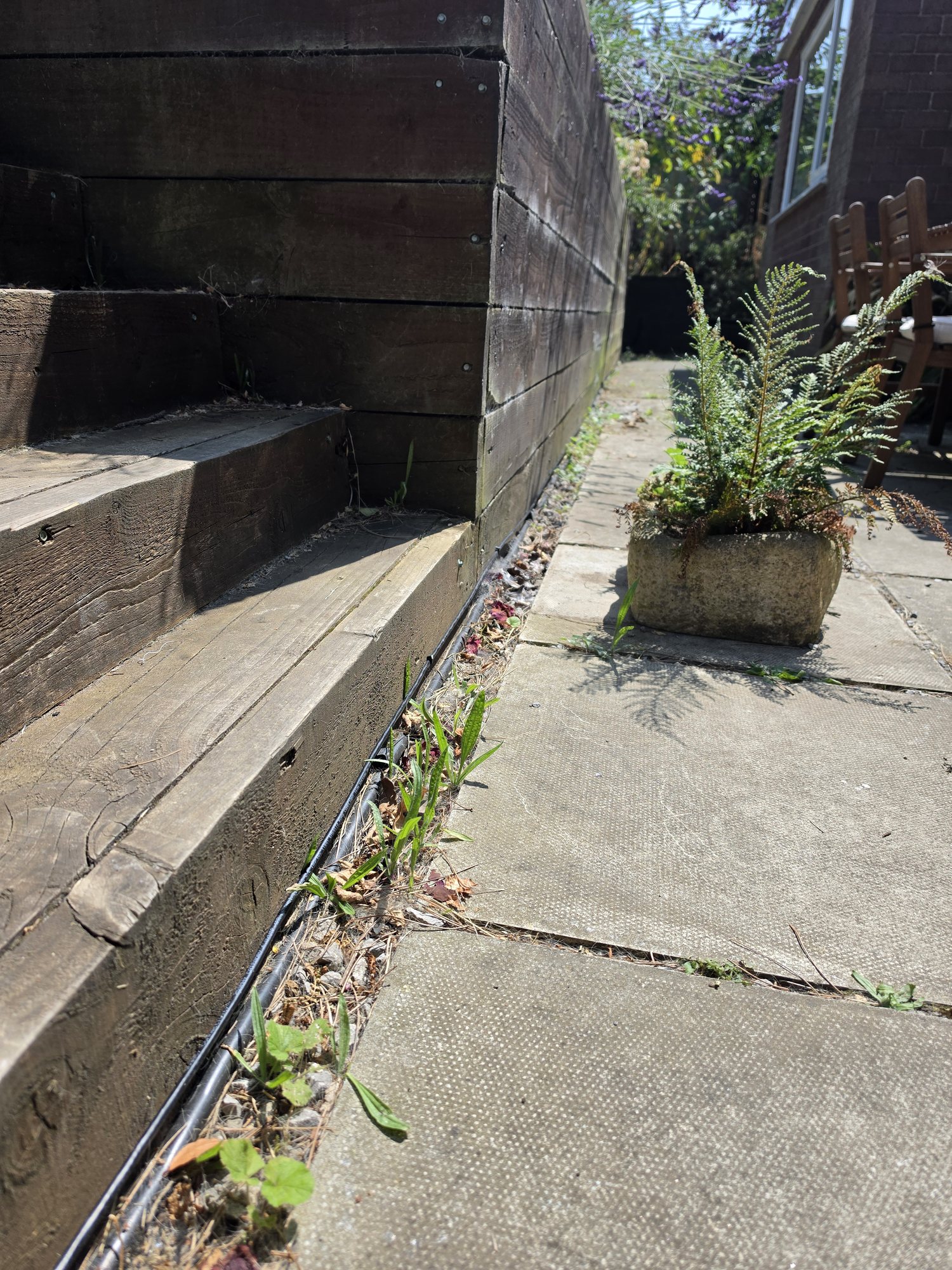
Routes that may work in a finished house
Loft and cupboard routes
A usable loft, eaves void, wardrobe or service cupboard can sometimes provide a route between floors. Suitability depends on safe access, insulation, fire stopping, hidden services, joist direction and where a cable can enter the room. The agreed entry and any visible containment are recorded before work starts.
External cable routes
An external route can avoid opening finished walls. It remains visible on close inspection, so the cable colour, clip line, penetrations, drip loops and entry seals should be agreed. Use cable rated for the environment and confirm ownership, lease, landlord or conservation restrictions before fixing anything to the building.
Surface trunking
Trunking is a visible finish, not a hidden one. It can be proportionate where chasing or lifting floors would create more disruption, provided its size, route, corners and outlet positions are agreed with the customer.
Existing conduits and service voids
A spare conduit or void is useful only after its ownership, route, capacity, segregation and condition are checked. We do not assume an old telephone, electrical or unidentified route can safely accept data cable, and we stop where hidden services or suspect building materials cannot be assessed.
Suspended floors
Lifting a carpet edge or floorboard may create a concealed route, but access and reinstatement depend on the flooring, fixings, pipes, cables, finishes and customer permission. The quotation should state what EDD will lift and refit and whether a flooring specialist, joiner or decorator is outside the agreed scope.
Survey, permission and stop points
- Confirm who owns the property and who can approve drilling, external clips and alterations.
- Check lease, landlord, listed-building, conservation-area or managing-agent restrictions where applicable.
- Review plans and use suitable detection before drilling; a detector does not prove a wall is clear.
- Stop if hidden electrical services, pipes, structural uncertainty or suspected asbestos cannot be managed safely.
- Agree fire stopping where a route passes through a relevant compartment or protected construction.
What a clear quotation should record
- The intended cable route and which parts will remain visible
- The agreed wall, ceiling, floor, cupboard or external access
- Cable type for the route and the termination format at each end
- The test and labelling included at handover
- Who handles lifting, refitting, filling, decorating and specialist making good
- Known assumptions and what happens if the concealed route is blocked
How long will the work take?
Duration follows the surveyed route and access, not a universal number of hours per socket. Furniture, floor finishes, occupied rooms, difficult penetrations, containment, testing and unexpected obstructions can all change the sequence. We give a property-specific scope and duration allowance after the route is agreed.
What the installation photograph proves
The image above is genuine EDD work and shows one external cable route. It does not prove that another house will have no visible cable, no lifted finishes, no decoration or the same completion time. Any future case example must pair route photographs with the agreed scope, permissions, testing and making-good record.
See our data-cabling service for the installation and testing scope, or our Cat6-versus-WiFi guide if the first question is whether a new cable is justified at all.
Frequently asked questions
Can Ethernet be installed without making a mess?
Often with limited disruption, but the finish depends on the property and agreed route. We identify visible containment, access holes, lifted finishes and making-good responsibility before work starts.
Can you cable a house without lifting floorboards?
Sometimes. Loft, cupboard, external or surface routes may avoid floor access, but none is assumed until the route, permissions and hidden-service risks have been checked.
Will the cable be invisible?
Not always. Concealed routes may be possible; external cable and trunking remain visible. The quotation should identify the proposed finish rather than promise invisibility.
Do you patch and redecorate afterwards?
Only the making-good stated in the written scope is included. Filling, joinery, flooring and decoration can be separate responsibilities depending on the route and finish.
Can Ethernet be installed in a listed or leasehold property?
Potentially, after the owner confirms the applicable consent and restrictions. We do not treat a technical route as permission to alter the building.
Need Wi-Fi, cabling or a proper home network sorted across Stockport, South Manchester, Tameside or East Cheshire? Evolution Data & Digital is a local, engineer-led business — the same engineer surveys, quotes and installs. We test the property properly, explain the honest fix and agree a fixed price before any work begins. Call 0161 399 1757, send a WhatsApp, or contact us online.
Clear written quotation before any chargeable work. Short-notice appointments may be available across Stockport, Greater Manchester and Cheshire.