
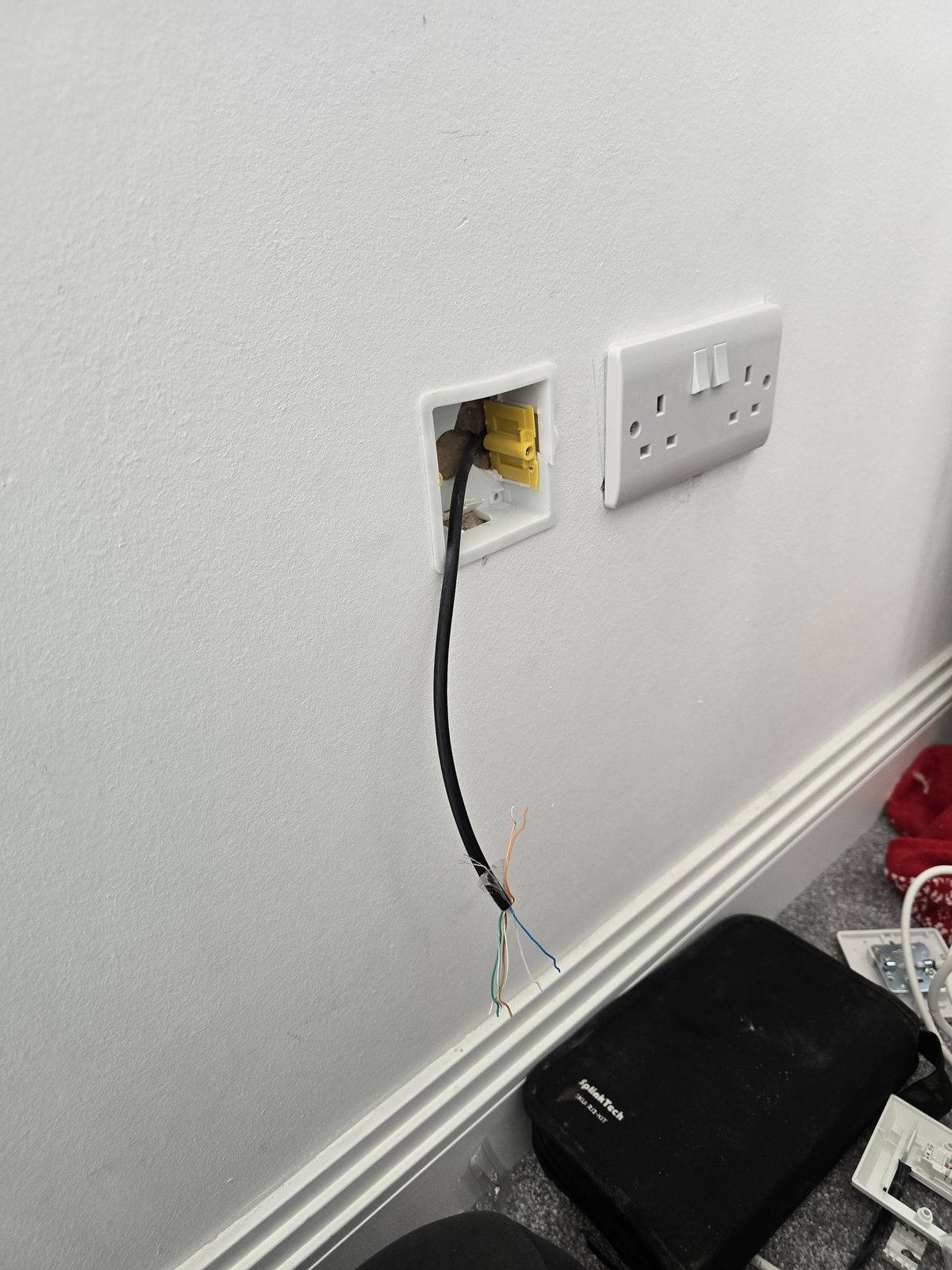
Ethernet sockets in a flat or apartment
Finished apartments need a practical route that respects the building and any landlord requirements. Our guide to adding Ethernet ports in flats explains surface routes, concealed options and what to send for a quotation. For wired access points in workplaces, see Business Wi-Fi Installation.
Cabling as part of an office move
If the brief also includes internet, Wi-Fi, phones, screens and security, our Office Technology Fit-Outs & Relocations service coordinates the physical technology alongside your MSP. The cabling specification and installation can still be agreed as a standalone scope.
Working with your IT provider or electrical contractor
If an MSP, IT provider or electrician is coordinating the wider project, our trade-partner service explains referral and specialist delivery arrangements. Agree who designs, installs, commissions and supports each part of the job before work starts, including who communicates with the customer.
What we install
From a single Ethernet drop behind the TV to a structured cabling install across a whole office, care home or retail unit. Cables are run discreetly through lofts, walls and floor voids, terminated consistently to the agreed wiring scheme and tested end-to-end. On new EDD runs we normally use T568B unless an existing site standard or project specification requires otherwise. The same tidy, labelled approach applies whether we're in a home or a commercial building.
- Cat6 / Cat6a runs
- RJ45 wall sockets & keystones
- Patch panels & 19-inch cabinets
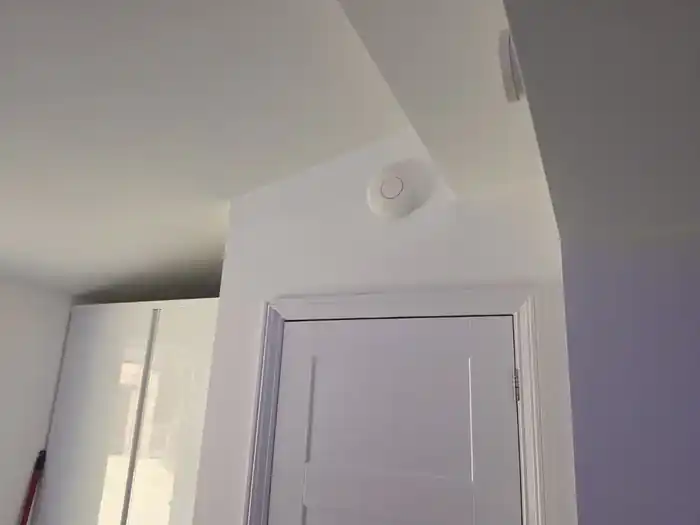
- PoE for cameras & access points
- Cable concealment & dado trunking
- Continuity, wire-map, link or certification testing to suit the scope
Structured cabling — done properly, first time
Structured cabling is what turns a pile of Cat6 runs into a network you can actually manage — drops labelled, patched into a central cabinet and terminated cleanly so future moves and changes are straightforward. We design structured cabling for offices, care homes, dental practices, small warehouses and multi-room domestic properties. Documentation is matched to the project: where required we can provide a floor plan of drop locations, a labelled patch schedule and written cable-test results as part of the handover.
Recent data & network cabling work — Stockport & nearby areas
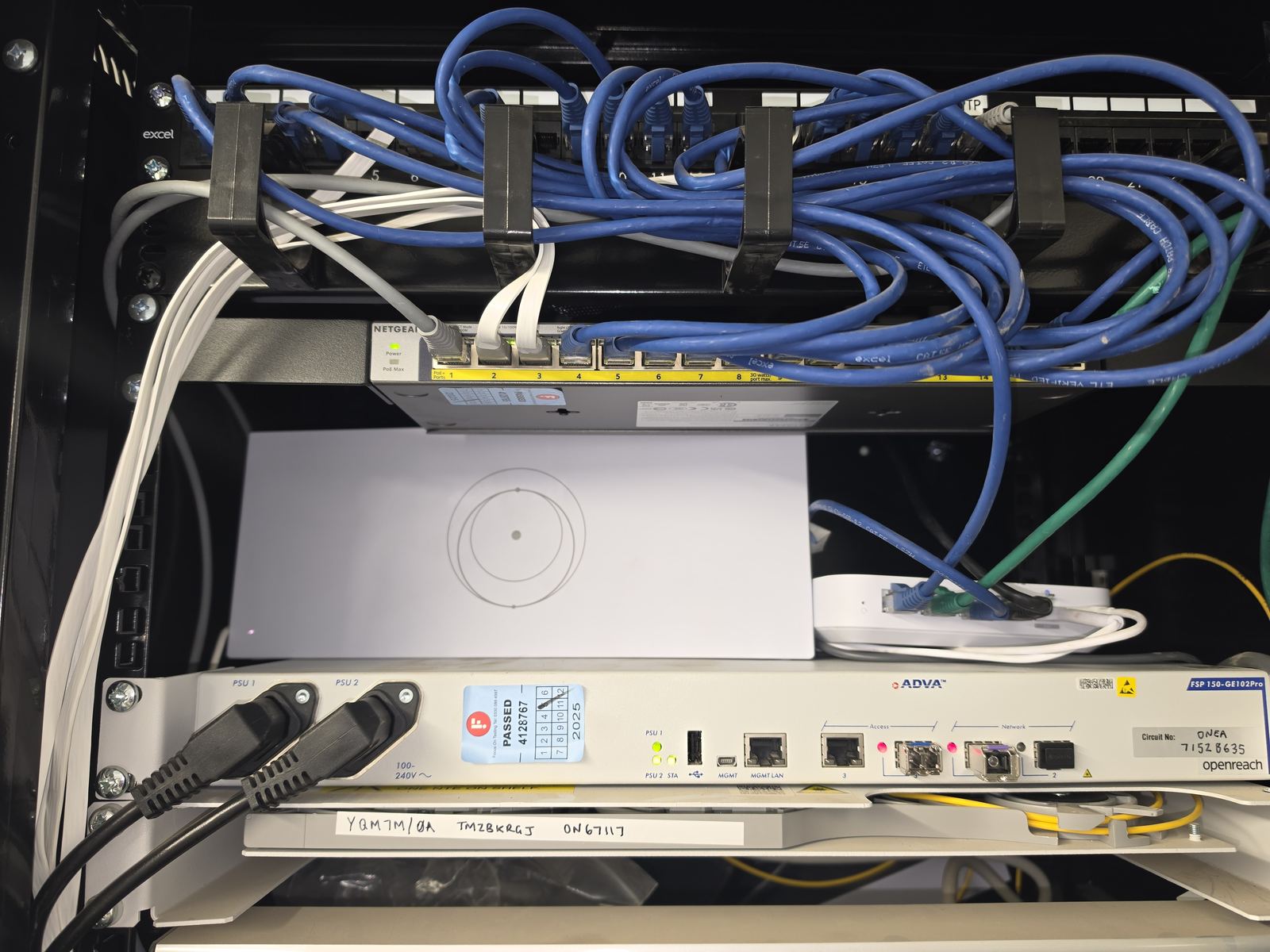
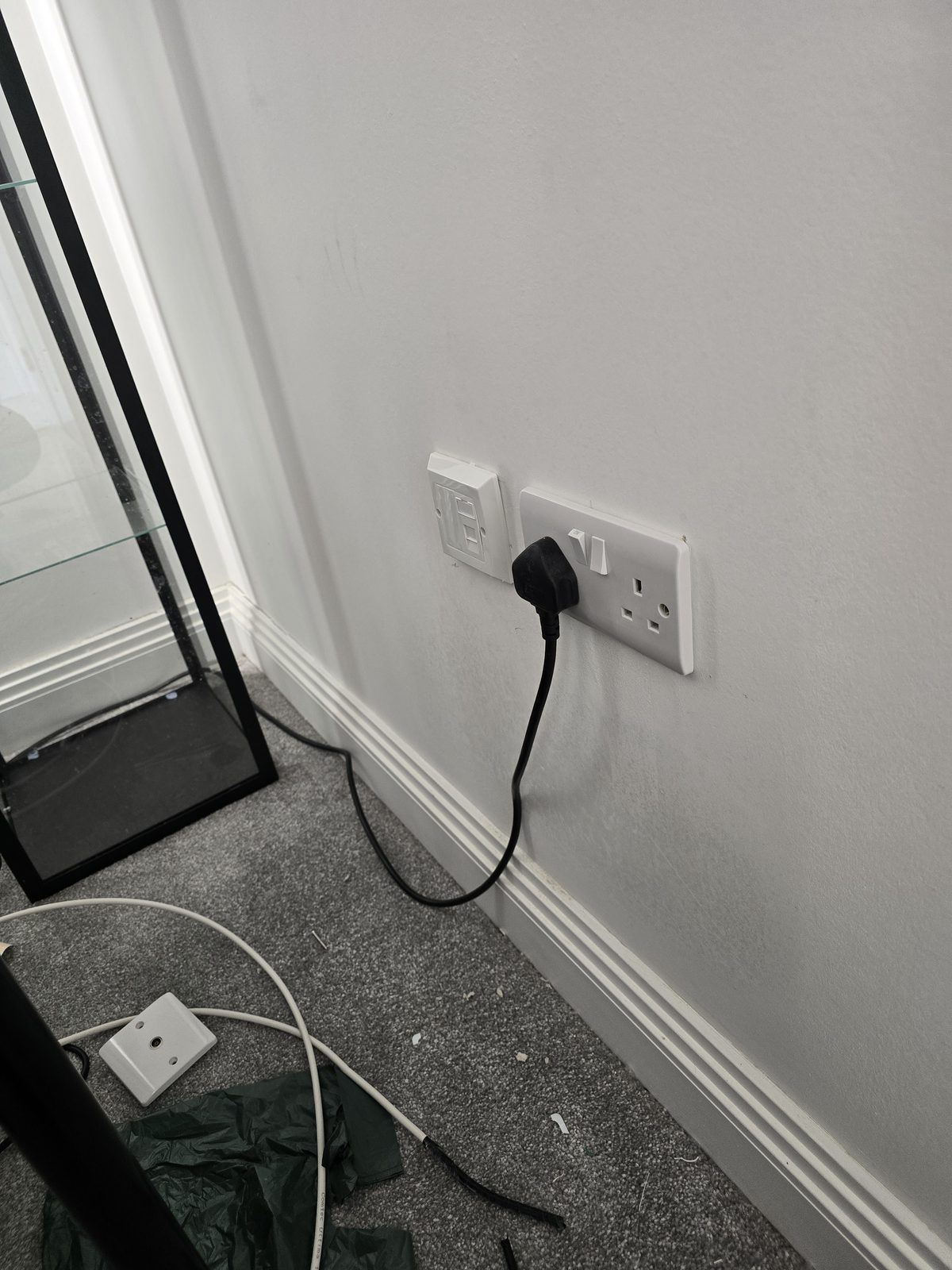
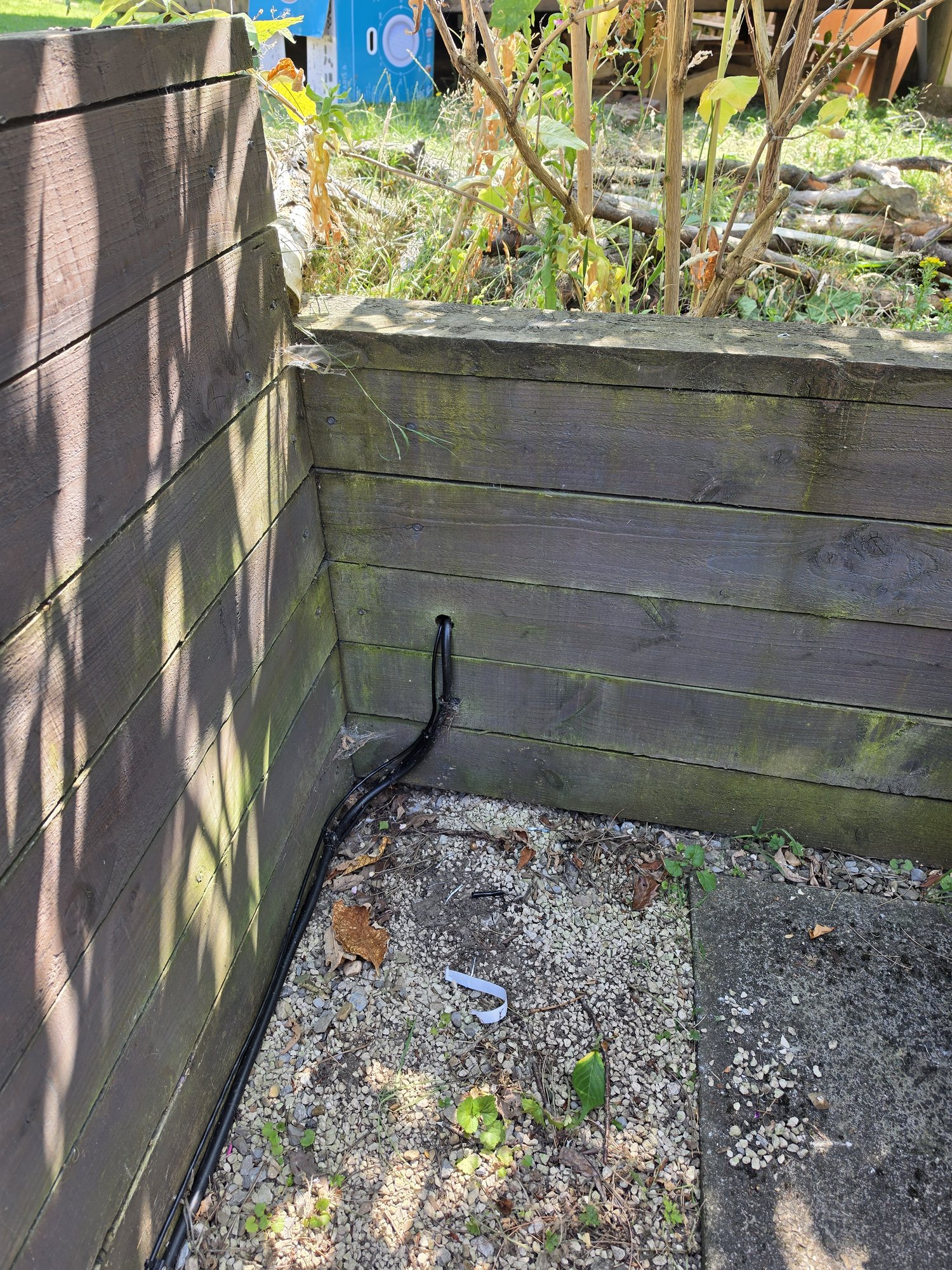
A small snapshot of live data cabling installs across Greater Manchester — commercial cabinets, structured Cat6 to keystones, and external runs to garden offices and outbuildings. See our care-home managed network and Wi-Fi case study for a project covering a new gateway, switch, access points and ongoing network support. For a finished-home retrofit, see the Clock Face discreet Ethernet cabling case study.
On the same genuine SK4 network project, EDD used a cable tester for wire-map, continuity and length checks and recorded a wired handover speed test of 930.23 Mbps download and 367.42 Mbps upload. Those figures are installation-specific and describe the tested connection on that job; they are not a universal cabling or broadband speed promise. The Noyafa tester result is not presented as Cat6 certification.

Manchester data cabling
For projects in Manchester city centre, Salford, Trafford and the surrounding Manchester districts, use our dedicated Manchester data cabling page. We also install data cabling throughout Stockport and suitable nearby areas.
Commercial fit-outs and larger cabling projects
Commercial cabling often involves time-boxed access, other trades working in parallel and site-specific requirements around noise, waste, containment, penetrations and working hours. We survey the space first, agree the constraints and plan the cable routes around the actual building rather than applying a generic template.
- Site survey before quoting — access, containment and services confirmed
- Coordination with any other trades already on site
- Out-of-hours and weekend working available where the space requires it
- Cable penetrations planned around the site requirements, with specialist fire-stopping coordinated where needed; labelled patch panels and test results where included in scope
- Handover documentation available to suit the project — floor plan, drop schedule and test data
Areas we cover for data cabling
We cover Stockport, Cheadle, Bramhall, Hazel Grove, Marple, Romiley, nearby South Manchester, Wilmslow, Alderley Edge and suitable projects into Cheshire and the Peak fringe. For Manchester city-centre, Salford and Trafford work, see our dedicated Manchester data cabling page.
Why a wired link is often the better backbone
Wi-Fi is essential for mobile devices, but fixed equipment such as access points, work PCs, TVs, games consoles and CCTV can benefit from a predictable wired path where cabling is practical. Ethernet does not make the internet itself faster than the service coming into the property, but it can remove wireless coverage, contention and backhaul variables from that part of the connection. We often recommend a mix — wired backbone, Wi-Fi where mobility matters.
Termination that meets the project spec — consistent, punched down, tested
A copper link is only as good as the cable, terminations and installation around it. T568A and T568B are recognised pair-assignment schemes; what matters operationally is following the agreed site scheme consistently at both ends. We normally use T568B on new EDD work, keep pair untwist within the connector requirements and terminate to suitable keystones or patch panels. Finished runs are tested as appropriate to the project for continuity, wire-map correctness and link performance, with formal certification available where it is part of the agreed scope.
Cable routing — where the tidy install actually happens
Cable routing is planned around the building, other services and the requirements of the cable and containment being used. Power/data segregation is not one universal 300 mm rule: applicable cabling standards use different separation requirements depending on factors such as the power cabling, IT-cable segregation class and whether metallic containment or barriers are present. We follow the project/site requirements, avoid unnecessary parallel exposure to mains, respect the cable manufacturer's bend radius and pulling limits, and protect penetrations and external routes appropriately. On extensions and renovations, getting the first-fix routes agreed before plasterboard usually produces the cleanest result.
- Power and data segregated to suit the route, containment and applicable project requirements
- Cable-specific bend radius respected — no kinks or crushed pairs
- Cable pulled and dressed without unnecessary strain or over-tightening
- External routes use cable, ducting or fibre suited to the environment and building arrangement
- Grommets at cable penetrations; required fire-stopping maintained or coordinated to the site specification
Fibre — when Cat6 isn't the right cable
For long runs, building-to-building links or projects where fibre is the better backbone, we can install OS2 single-mode or OM4 multimode fibre. Fibre installation, termination or splicing and appropriate testing are available, with the method and test equipment matched to the project. Links can be handed over into fibre patch boxes, media converters or SFP-equipped switching as the design requires. For switch-to-switch, rack, floor and building backbone projects, see our fibre optic network cabling service.
Commercial data cabling — sectors we work with
Our commercial data cabling work spans Stockport, South Manchester and Cheshire, and different sectors have different infrastructure requirements. A dental practice may need separated connectivity for clinical, admin and payment devices, a warehouse may need cable routes planned around working areas, and a care home may need cabling phased around residents and staff. We provide the underlying network and cabling infrastructure and plan it around the actual environment, not a generic template.
- Offices — floor boxes, ceiling drops, desk cabling, patch panels
- Retail — tills, PDQ terminals, back-office, guest Wi-Fi backhaul
- Hospitality — pubs, restaurants and hotels with EPOS, CCTV and staff/guest split
- Care homes — structured cabling for resident Wi-Fi, admin networks and third-party care systems where specified
- Dental & GP practices — separate clinical/admin connectivity and dedicated network segments for card terminals where required
- Warehouses & light industrial — cable-tray runs, PoE cameras, wireless bridges
- Home offices & garden rooms — hard-wired backbone for consistent video-call quality
UniFi & Omada — the kit we standardise on
For structured cabling that terminates into a managed network we standardise on Ubiquiti UniFi or TP-Link Omada — both give proper managed switching, VLAN segmentation, cloud dashboards and long-term firmware support without the eye-watering licensing cost of Cisco Meraki. We're not brand-locked though; where a client already runs Cisco, HPE Aruba or a specific vendor, we'll cable and integrate to their standard so their existing IT provider can adopt it cleanly.
Larger commercial jobs
For full commercial networks — cabling plus switches, access points and managed Wi-Fi — see our commercial network installation and business internet solutions pages.
What affects the cost
A quote or non-invasive site assessment is free. Once the scope is agreed, the quoted price is fixed for that scope. If hands-on fault diagnosis is needed before the scope can be confirmed, we'll explain any charge before diagnostic work starts. Cost depends on the scope of work, cable/category, containment, testing requirement, access and route complexity. Most planned jobs can be discussed from drawings, photos or a site survey before the scope is fixed. Ring the office on 0161 399 1757 or send a WhatsApp and we'll review it during opening hours.
Often combined with
Data cabling is the natural pairing for CCTV, Wi-Fi installation and TV wall mounting — we typically run everything in one visit. Our Prestwich media-wall and UniFi Wi-Fi case study shows why network provision is worth planning before finished walls are closed: the room was complete without a dedicated data cable, so the Wi-Fi improvement had to work around the finished space. On new builds and full renovations, the cabling is the first-fix foundation of a complete smart home automation system. Deciding between wired and wireless? See our guide on when Cat6 beats Wi-Fi and our explainer on structured cabling for small businesses.
“He turned up within an hour of me making the enquiry and was fast, efficient, tidy and knowledgeable.”
Manchester cabling & useful guide
Planning cabling in Manchester? Explore our Manchester installation service, or compare Cat6 and Cat6A to help choose the right cable for your project.
Data Cabling near me — Stockport & Greater Manchester
Searching for data cabling near you? Our engineer is based in Stockport (SK6) and covers the whole borough plus surrounding Greater Manchester, north-Cheshire and High Peak areas. Short-notice appointments may be available depending on location, workload and the work required.
- Stockport
- Cheadle
- Heaton Chapel
- Offerton
- Edgeley
- Davenport
- Bramhall
- Hazel Grove
- Marple
- Romiley
- Woodley
- Bredbury
- Compstall
- Poynton
- Hyde
- Gee Cross
- Oldham
- Rochdale
- Macclesfield
- Buxton
Jump straight to your town
Additional service areas & regional projects
Coverage varies by distance and scope. Nearby Greater Manchester areas can suit the full service range, while farther regional work is weighted toward substantial planned projects. We confirm the postcode and scope before a visit is arranged.
- Preston
- Blackburn
- Blackpool & Fylde
- Macclesfield
- Congleton
- Chester
- Glossop
- New Mills
- Whaley Bridge
- Bolton
- Bury
- Wigan