
Quick answer
Hosted VoIP normally needs power and connectivity at the site, so a local power cut can stop desk phones even if the cloud phone platform itself is still online. Keeping VoIP working means protecting the whole chain that matters — not just the handset. That can include the ONT or modem, router/firewall, PoE switch, phones and any backup internet path. Mobile apps and call forwarding can provide additional resilience where they are configured in advance.
Businesses often ask this as if the phone itself is the only thing that needs power. On a modern hosted system, the telephone is usually one link in a longer chain. If the router or fibre ONT has gone dark, keeping the desk handset alive on a tiny UPS does not achieve very much.
The right continuity plan starts by identifying every local component that the call path depends on.
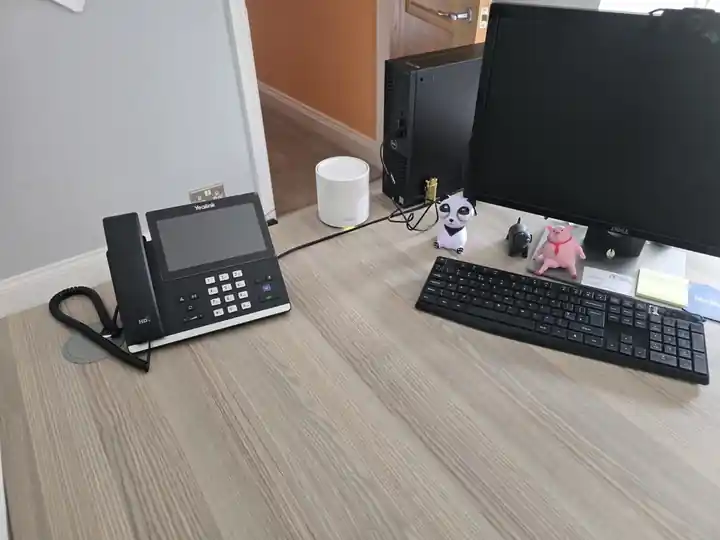
Why does VoIP stop in a power cut?
Traditional analogue arrangements could sometimes continue because power for the telephone service was provided differently. Broadband-delivered voice depends on active equipment at the premises, so the local router and other network equipment need electricity.
Ofcom's current digital-landline guidance makes the same basic point for consumer digital phone services: digital landlines need mains electricity and will not work in a power cut unless suitable backup is available. Business hosted-VoIP resilience should be designed around the specific service and site rather than assuming consumer backup arrangements apply automatically.
What actually needs to stay powered?
Will a UPS keep VoIP working?
It can, provided it protects the equipment that forms the real call path and has enough capacity for the outage you are planning around. A UPS is not a magic “keep phones alive” box; its runtime depends on the connected load and battery capacity.
For a small office, it may be practical to protect the ONT/modem, router and PoE switch together so the phones and Wi-Fi continue for a period. Larger sites need a more deliberate power and runtime calculation.
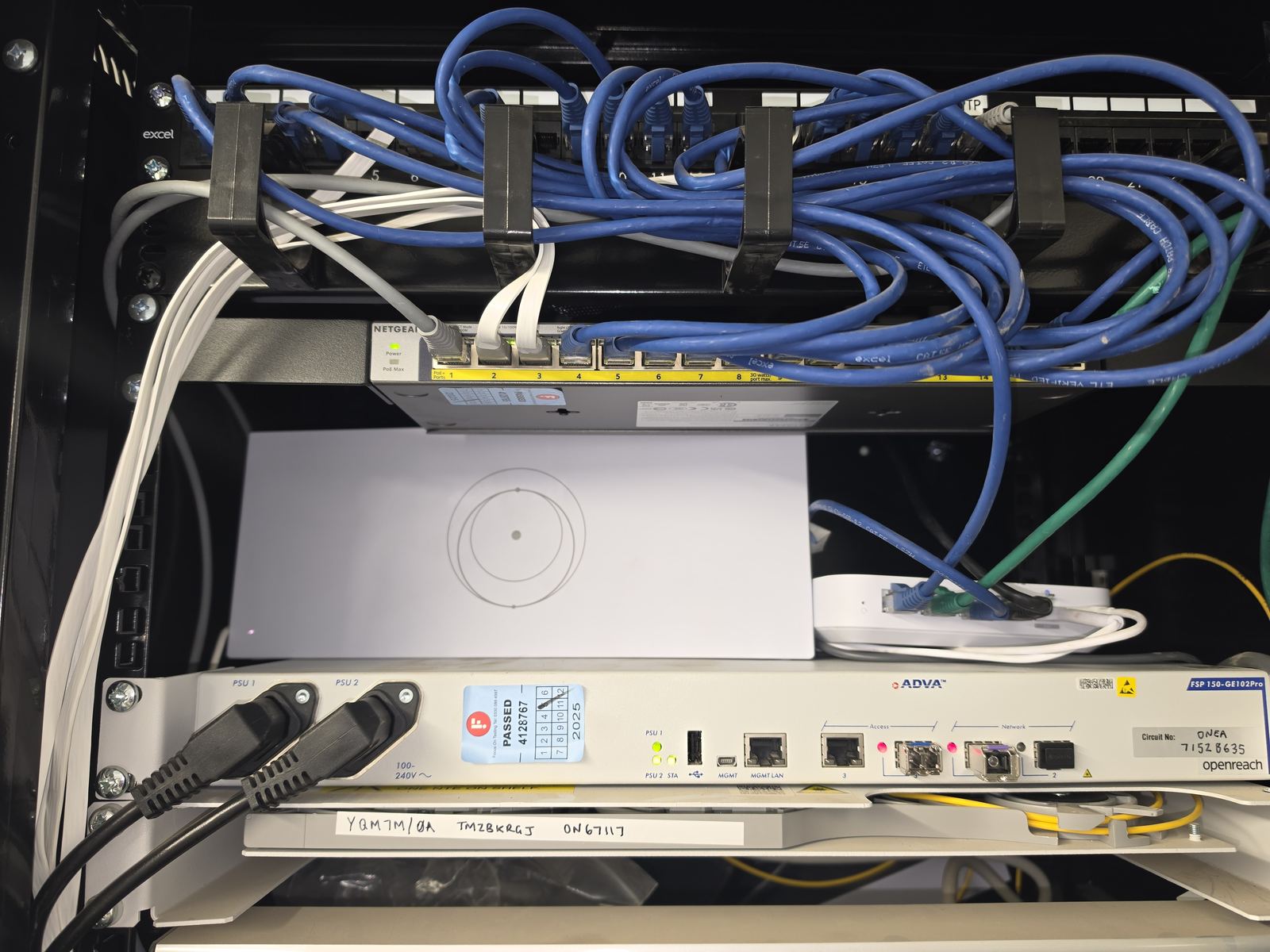
What if the power is on but the broadband fails?
That is a different failure. A UPS cannot fix a provider outage or damaged fibre. If phones are important to the business, internet resilience can include a second connection or 4G/5G failover through a suitable router.
Our business internet and resilience service looks at the incoming connection and failover separately from the phone platform itself.
Can VoIP calls fail over to mobile phones?
Hosted platforms can often route calls to mobile apps, external mobile numbers or alternative destinations, depending on the provider and configuration. That can be useful because the public business number can remain the customer's contact route even if the premises are unavailable.
The important part is to configure and test that behaviour before an outage. A continuity plan that only exists in someone's head at the moment the router goes down is not much of a plan.
Can staff use a VoIP mobile app during a site power cut?
Potentially, yes, if the hosted platform remains available and the phone itself has working mobile data or another internet connection. That can allow staff to make or receive business calls away from the failed site.
It should be tested in advance, especially if the business relies on particular call groups, caller ID behaviour or emergency procedures.
VoIP continuity-plan template
Put the agreed design into one controlled record before anyone relies on it. The figures and review interval should come from the customer's approved requirement and measured tests, not a generic promise on a web page.
What about 999 and 112 emergency calls?
Emergency-call availability, caller-location handling and outage behaviour depend on the exact provider, service, number configuration and device being used. Before relying on hosted VoIP, ask the provider to confirm in writing whether 999 and 112 calling is supported, which address or location record it will send, how that record is updated for moved handsets or remote staff, and what happens during loss of site power, broadband or the provider platform.
Ofcom's emergency-calling compliance update (checked 3 September 2026) covers providers' duties to protect access to emergency organisations and provide accurate caller-location information where technically feasible. Those are provider duties; they do not prove that a particular business installation, number or device is resilient or suitable. A business should not use consumer protection as a substitute for its own continuity planning, and consumer digital-landline backup arrangements must not be assumed to cover every business hosted-VoIP service.
Document an alternative way to reach the emergency services, such as a charged mobile with usable coverage or another independently powered service, and test the arrangement without placing a live emergency call. The business risk owner should approve the provider evidence, recorded location and alternative-access plan for each site.
A simple business VoIP resilience checklist
- Obtain provider-specific confirmation of 999/112 access and caller-location records for every site and number.
- Document an independently usable alternative for emergency calls and assign a business risk owner.
- List the equipment the phone service depends on.
- Decide how long a local power outage you actually want to ride through.
- Size UPS protection around the real network load.
- Decide what happens if the broadband fails while power remains on.
- Configure mobile-app or forwarding options where useful.
- Test the failure modes rather than assuming the design works.
How does this fit with switching a business to VoIP?
Resilience should be discussed before the number moves, not after the first outage. Our business number-porting guide explains the changeover process, while the VoIP phone systems page covers the wider service.
Evolution Data & Digital can look at the phone platform, local network and connectivity together across Stockport, Greater Manchester and Cheshire. That is particularly useful where the same router, switch and internet connection support Wi-Fi, CCTV and other business systems as well as the phones.
Frequently asked questions
Does VoIP work during a power cut?
Not automatically. Hosted VoIP normally depends on powered local network equipment such as the ONT or modem, router, switch and handset. Backup power can keep the service available for a period if the whole required chain is protected.
Will a UPS keep my VoIP phones working?
It can if the UPS powers the equipment the phone service actually depends on and has enough runtime. Protecting only the handset is not enough if the router, ONT or PoE switch loses power.
What happens to business calls if the office broadband goes down?
The answer depends on the hosted platform and connectivity design. Options can include a backup internet connection, mobile apps or forwarding calls to alternative numbers, but these need to be configured and tested in advance.
Can VoIP calls go to mobiles during an outage?
Many hosted systems can route calls to mobile apps or external numbers where configured. The exact behaviour depends on the platform and the call-routing plan.
Do I need backup internet as well as a UPS?
If the business needs continuity through both power cuts and broadband outages, the two risks should be handled separately. A UPS protects against local power loss; a second WAN or mobile failover can protect against an internet connection failure.
Can a business rely on VoIP for 999 and 112 calls?
Only after the exact provider has confirmed emergency-call support, caller-location handling and outage behaviour for the service, number and device. Record an independently usable alternative and have the business risk owner approve and test the plan without placing a live emergency call.
Clear written quotation before any chargeable work. Short-notice appointments may be available across Stockport, Greater Manchester and Cheshire.