
Quick answer
The best CCTV position is not simply the highest corner of the house. Put cameras where they can see the real approach to a door, driveway, side gate, garage or other area you need to protect, at an angle that gives useful detail rather than only a wide overview. Then check the same view at night for glare, infrared reflection, headlights and other lighting problems.
CCTV positioning decides whether a recording is genuinely useful or just proves that "somebody was there". A camera can have a sharp image, high resolution and a wide field of view yet still be in the wrong place for the job.
We plan camera locations around where somebody would actually approach, what the customer needs the view to show, and how the scene behaves in daylight and darkness. That usually produces a better system than mounting every camera as high and wide as possible.
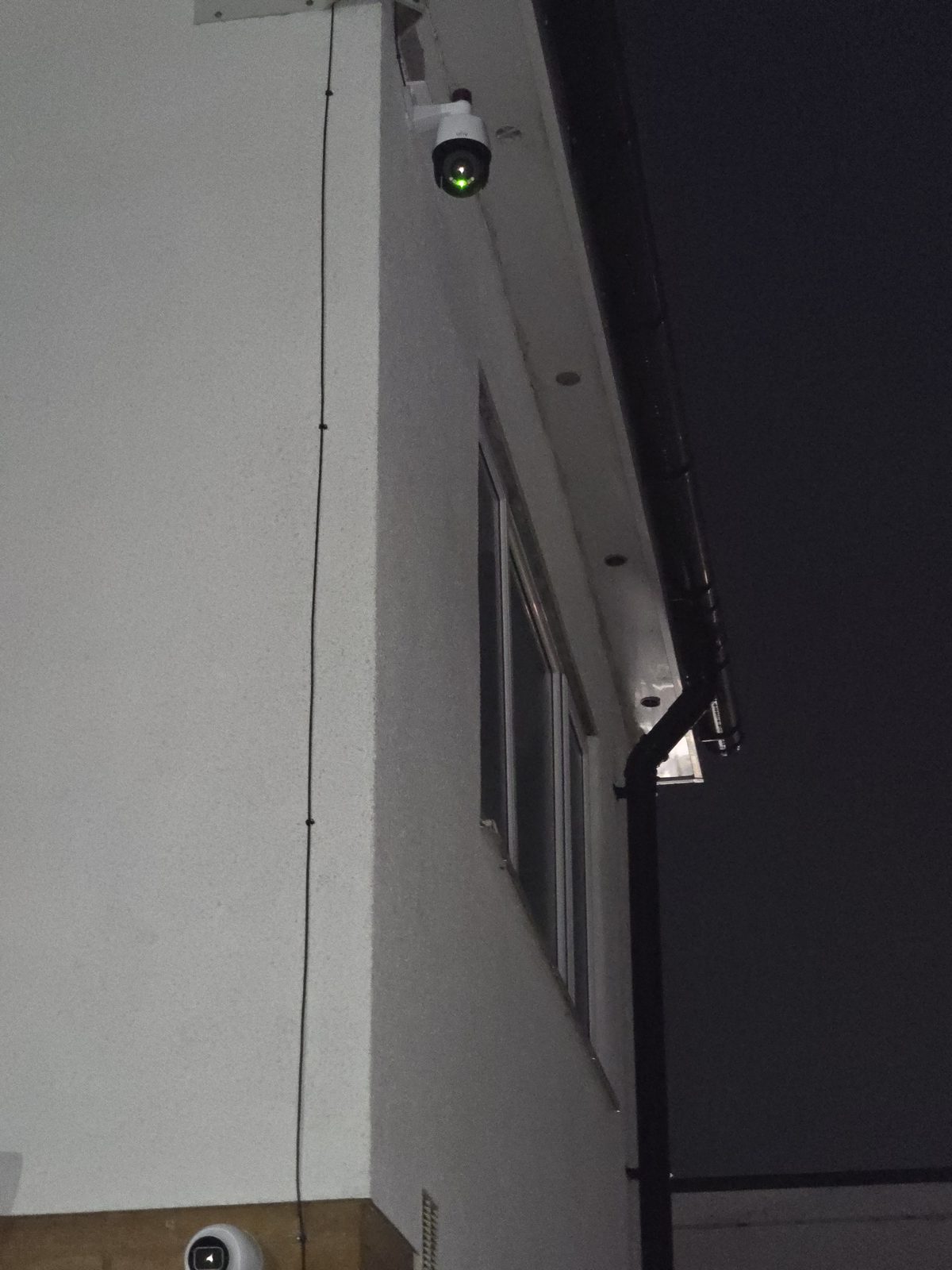
The three questions to ask before choosing any camera position
- What event or route is this camera meant to cover? A front door, driveway entrance, side passage and rear patio can need very different views.
- How close will the subject be when the important moment happens? A person filling a useful part of the frame is more valuable than a tiny figure at the far end of a huge scene.
- What will the lighting do? Think about darkness, security lights, sunrise or sunset, car headlights, reflective walls and nearby soffits.
If those questions do not have clear answers, adding another camera rarely fixes the underlying design problem. Our camera-count guide explains how we decide whether a position is genuinely needed in the first place.
Best CCTV positions around a typical home
Why CCTV cameras can be mounted too high
Height can protect a camera from easy interference and can help it see over obstacles, but more height also creates a steeper viewing angle. If a camera is so high that it mainly sees the top of somebody's head, it may produce a worse identification view than a carefully chosen lower position.
There is no single correct mounting height for every property. The camera lens, distance to the target area, building shape and risk of tampering all matter. The right position is the one that balances useful detail, coverage and physical practicality for that particular view.
Front-door CCTV: think about the approach, not only the doorstep
A camera pointed straight down at the door can record parcels and the top of a visitor's head while missing the useful facial view you expected. We normally look at the direction people approach from and try to create a view that sees them before or as they reach the entrance.
Doorbell cameras can complement this because they sit near face height, but they do a different job from a wider CCTV overview. A well-designed system can use each view for what it does best rather than expecting one camera to solve everything.
Driveway cameras: decide what you actually want to identify
"Cover the driveway" can mean several things. You may want to see vehicles generally, people walking towards parked cars, somebody approaching the front of the house, or activity around a gate. Those requirements can lead to different camera positions.
A single very wide driveway camera may give a good overview but reduce useful detail at the far edge of the picture. If a specific entrance to the driveway is important, it can be better to design around that narrower approach rather than the whole area.
Side passages are where blind spots often appear
Side routes are easy to miss during a front-and-rear design. Gates, walls, conservatories, extensions and sheds can hide somebody for a large part of their route around the house.
Stand where the camera is proposed and look down the actual path. If the building corner blocks the useful part of the route, moving the camera a relatively small distance can be more effective than fitting another unit nearby.
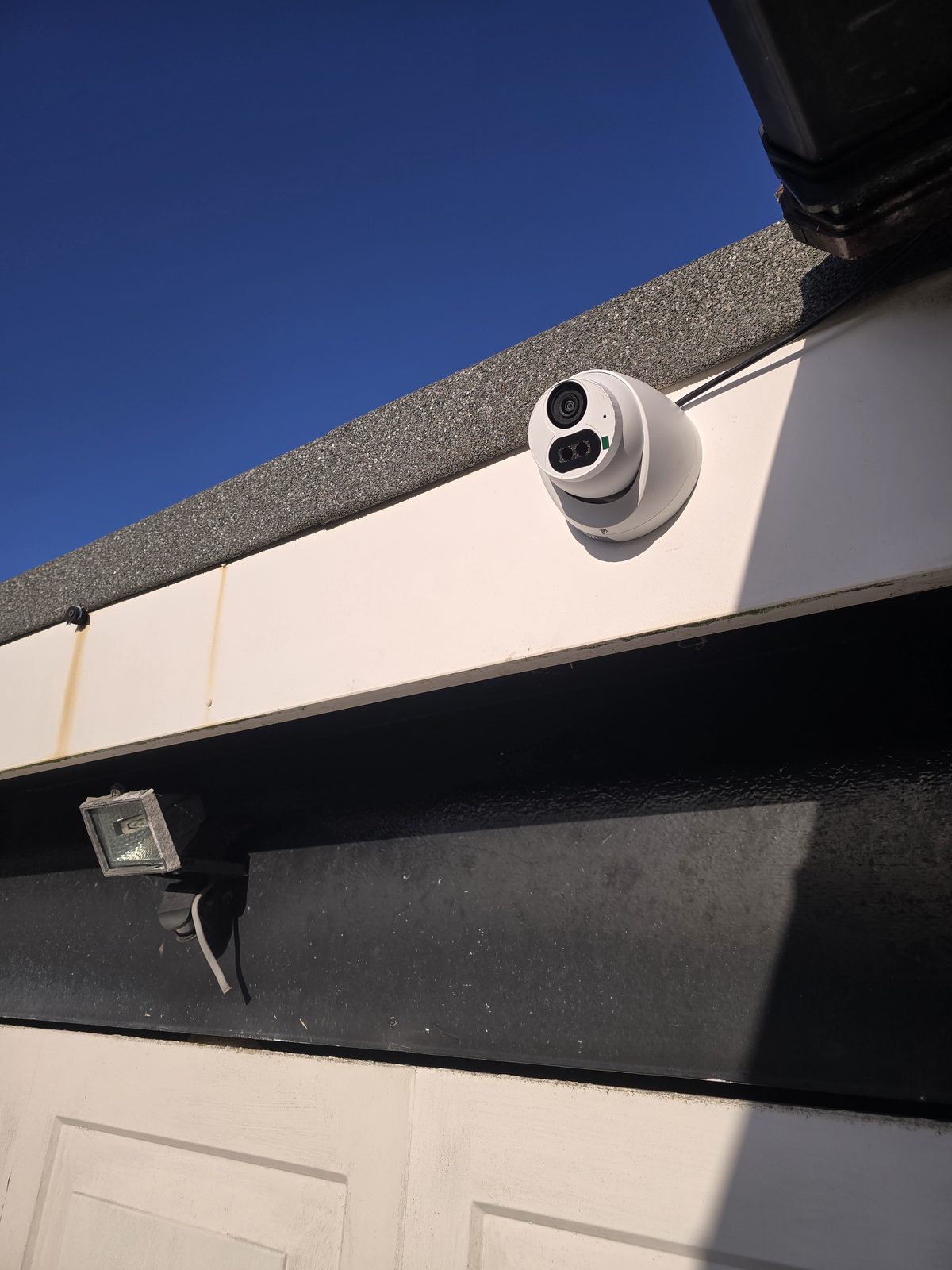
Check reflections and infrared before finalising the position
Night-time problems are often caused by the scene around the camera rather than the camera itself. Infrared light can bounce off a nearby wall, fascia, soffit or another bright surface and wash out part of the image. Spider webs, rain and dirt close to the lens can also become much more obvious under infrared illumination.
Avoid pointing the camera so that a nearby surface dominates the edge of the frame if that surface is likely to reflect light back into the lens. The same applies to bright external lights: test what happens when they switch on rather than assuming daytime positioning will translate perfectly to night.
Be careful with headlights and strong backlight
A driveway camera facing directly towards vehicle headlights can have a much harder job when a car enters at night. Similarly, a camera aimed towards a bright sky, low sun or brightly lit doorway can lose detail in the darker part of the scene.
Camera image processing can help with difficult contrast, but sensible positioning remains the first step. Where practical, choose an angle that reduces extreme light directly into the lens.
Trees, bushes and seasonal growth matter
A clear camera view in winter can be partly blocked by leaves six months later. Branches and plants can also move in wind, create repeated motion events or reflect infrared close to the camera.
Check the likely mature growth around the proposed view. If the only solution relies on constantly cutting back somebody else's hedge or a fast-growing tree, the camera location probably deserves another look.
What about neighbours, pavements and public areas?
Official home-CCTV guidance checked 3 September 2026. The current ICO home CCTV guidance and GOV.UK domestic CCTV guidance say that cameras should be aimed to minimise unnecessary intrusion. If a system captures people beyond the property's boundary — for example in neighbouring property, shared space or a public area — data protection law can apply and the homeowner has additional responsibilities.
Recheck these settings against the commissioned camera views, recorder and app rather than relying on a proposal or default configuration. This is general information, not legal advice; review the current official guidance for the circumstances of the property and system.
Should CCTV cameras overlap?
Some overlap can be useful where somebody passes from one important area into another, but duplicate views are not automatically valuable. If two cameras see almost the same scene from almost the same angle, one of those channels may be better used somewhere else.
A stronger design often uses different views for different jobs: an overview camera shows the sequence of events while a better-placed approach camera captures more useful detail.
Positioning also has to work with the cable route
A perfect theoretical camera location is not always a sensible installation point. A wired PoE camera needs a safe, maintainable cable route back to the network or recorder, suitable mounting structure and a way to keep connections protected.
That does not mean choosing the easiest cable route and accepting a poor picture. It means designing the camera and infrastructure together. Our CCTV installation in Stockport is based around that combined walk-round rather than deciding camera positions after the cable has already been run.
How we test a proposed CCTV position
- Stand in the route a person would actually take and check the camera angle from there.
- Look for walls, gates, downpipes, soffits, foliage and other close objects that can block or reflect into the view.
- Consider the sun, security lights and vehicle headlights at different times.
- Check whether the camera is doing an overview job or a detail job — and whether the framing suits that purpose.
- Confirm the mounting and cable route are practical and maintainable.
- Review the final live and recorded image after installation rather than treating the physical mounting position as the end of the job.
What to check before signing off camera positions
Check the final views with the installer before accepting the layout. Keep drawings and screenshots showing door approaches, blind spots or recorder locations private. This checklist explains the design checks without exposing a customer's security layout.
- The purpose of each camera and the approach or area it is intended to cover.
- The agreed field of view, privacy exclusions and any masking applied.
- Recorded day and night test results, including glare, reflection and lighting checks.
- The agreed mounting position and a safe, maintainable cable route.
- Customer sign-off on the final views, recording setup and any documented limitations.
Where should your CCTV cameras go?
Start with the real approach routes, then choose the position and angle that give the most useful picture of each one. Avoid unnecessary height, obvious backlight, infrared reflection and duplicate coverage. Finally, keep the field of view proportionate to what you genuinely need to monitor.
If you want those positions planned around your actual property rather than a generic camera diagram, see our CCTV installation page. If you are still deciding the size of the system, start with How Many CCTV Cameras Do I Need?.
Frequently asked questions
Where is the best place to put CCTV cameras on a house?
Prioritise the real approaches to front and rear doors, driveways, side gates and any valuable outbuildings. The best position is the one that gives useful detail of the route rather than simply the widest possible view.
How high should CCTV cameras be mounted?
There is no universal height. The position must balance useful viewing angle, distance, camera type, obstruction clearance and resistance to tampering. Mounting too high can create a steep top-down view with less useful facial detail.
Should CCTV point at the front door or the driveway?
It depends on the purpose of the view. A front-door camera and a driveway overview often solve different problems. Sometimes one position can cover both well; sometimes splitting them produces far more useful footage.
Can my home CCTV camera see the pavement?
The ICO advises aiming domestic CCTV at your own property where possible. If your camera captures beyond your boundary, including public or neighbouring areas, data protection law can apply and you may have additional responsibilities.
Why does my CCTV look white or foggy at night?
One possible cause is infrared light reflecting from a nearby wall, soffit, fascia, dirt, rain or spider webs close to the lens. Camera position and the objects immediately around it should be checked as part of night-time commissioning.
Clear written quotation before any chargeable work. Short-notice appointments may be available across Stockport, Greater Manchester and Cheshire.