
Quick answer
There is no correct CCTV camera count based only on house size. A useful system starts by identifying the entrances, approaches and areas where you actually need evidence, then choosing the fewest camera positions that cover those routes properly. A small home may need two or three well-planned cameras; a similar-looking property with a side passage, detached garage or several access routes may need more.
Search for "how many CCTV cameras do I need?" and you will quickly find package-led answers: two cameras for this house, four for that one, eight for a business. That is convenient for selling boxes, but it is not how we would plan a system on site.
The better question is which routes or areas need useful coverage, and can one camera genuinely do more than one job? A camera that sees a huge area but cannot give useful detail where somebody actually approaches the property is not automatically better than a narrower, properly placed view.
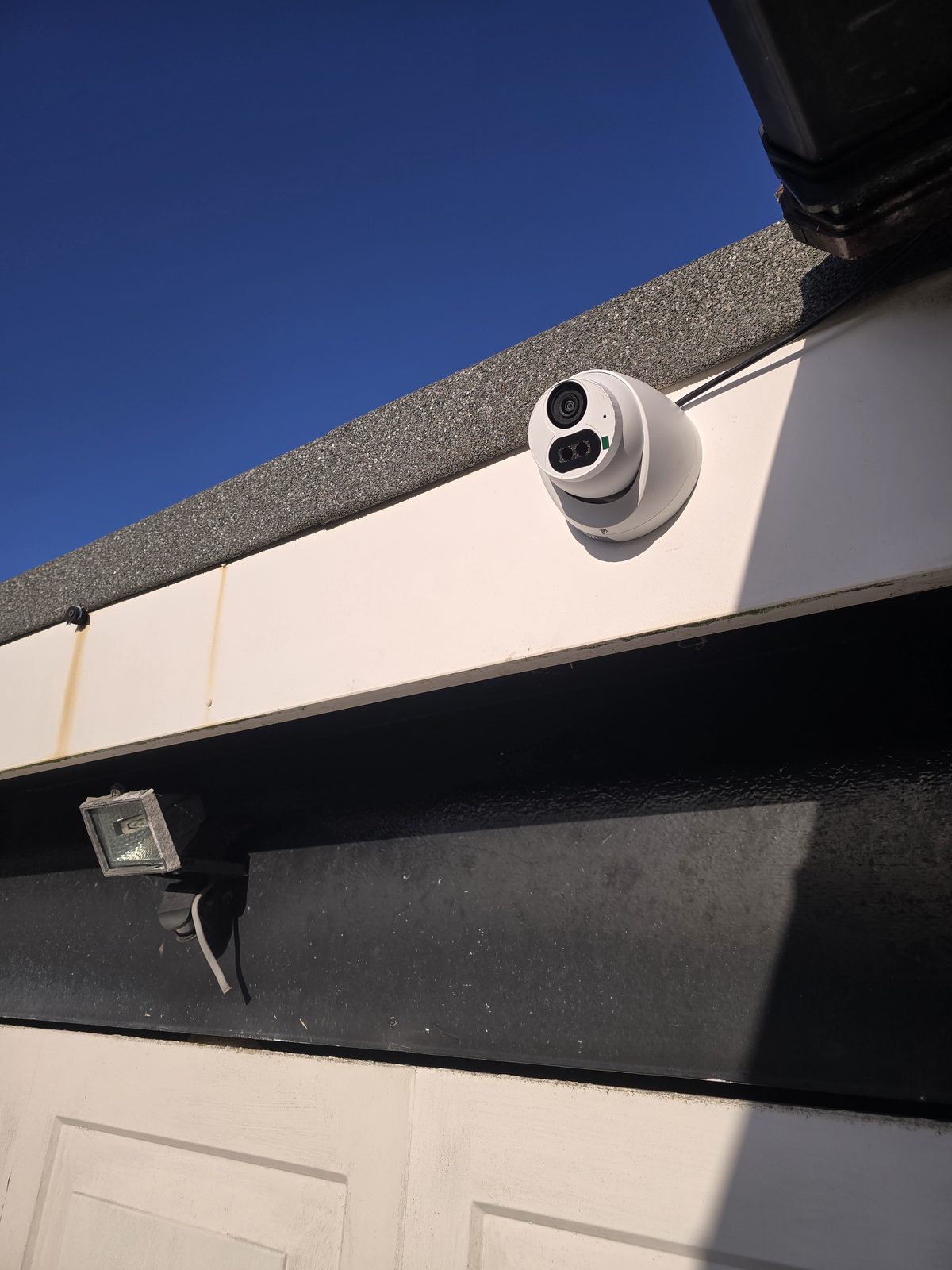
Privacy-by-design check before adding another camera
Official domestic-CCTV guidance checked 3 September 2026. If a home system captures people outside the property's boundary, data protection law can apply. Review the current ICO home CCTV guidance and GOV.UK domestic CCTV guidance for the actual design. This summary is general information, not legal advice.
Start with access routes, not the number of bedrooms
Walk around the outside of the property and list the places somebody can realistically approach, enter or reach something valuable. For a typical home that may include the front door, driveway, side gate, rear garden, garage or an outbuilding.
Then decide which of those need a dedicated view and which can sensibly share one. A front camera may cover the path to the door and part of a driveway if the geometry works. On another house, trying to cover both with one very wide view may make faces and number plates too small to be useful.
Two cameras can be better than four badly placed cameras
More cameras do not automatically mean more security. If several cameras are mounted too high, aimed at the same area or looking into strong backlight, you can end up storing lots of footage without improving the evidence you would actually want after an incident.
We would rather have a smaller system where every camera has a clear purpose than fill spare NVR channels simply because they are available. That is also why our CCTV installation process starts with a walk-round and proposed camera positions before equipment is fixed to the building.
What does each camera need to achieve?
A useful design normally mixes different jobs. One camera might provide a broad overview of the front of a property. Another may be positioned to give much better detail of somebody approaching a door or moving through a side passage.
That distinction matters because a wide image can look impressive on a phone while still giving very little usable detail once you zoom into a person at the far edge of the picture.
- Overview: understanding what happened across a wider area.
- Approach: seeing somebody move towards a door, vehicle or gate.
- Identification detail: designing the view so a person occupies enough of the image to be useful.
- Specific asset coverage: monitoring a garage, outbuilding, delivery area or other particular risk.
Common home layouts and how we think about them
Terraced house
A terraced property may have relatively few external routes. Front and rear coverage can sometimes be achieved with a small number of cameras, but rear alleys, shared access and the actual shape of the garden can change that quickly.
Semi-detached house
The side route is often the extra consideration. If somebody can move from the front to the rear without passing through a useful existing camera view, a dedicated side position may be more valuable than adding another broad front camera.
Detached house
Detached properties can have several approaches, more corners and more places where a camera loses sight of somebody. The right count depends heavily on entrances, drive shape, side access and outbuildings rather than the square footage of the house.
Home with a garage, workshop or garden building
Treat the separate building as its own little coverage problem. Ask whether the important thing is the door itself, the approach to it, the space between buildings or all three. If the building is remote, the network and cable route also need planning rather than assuming a camera can simply be added later.
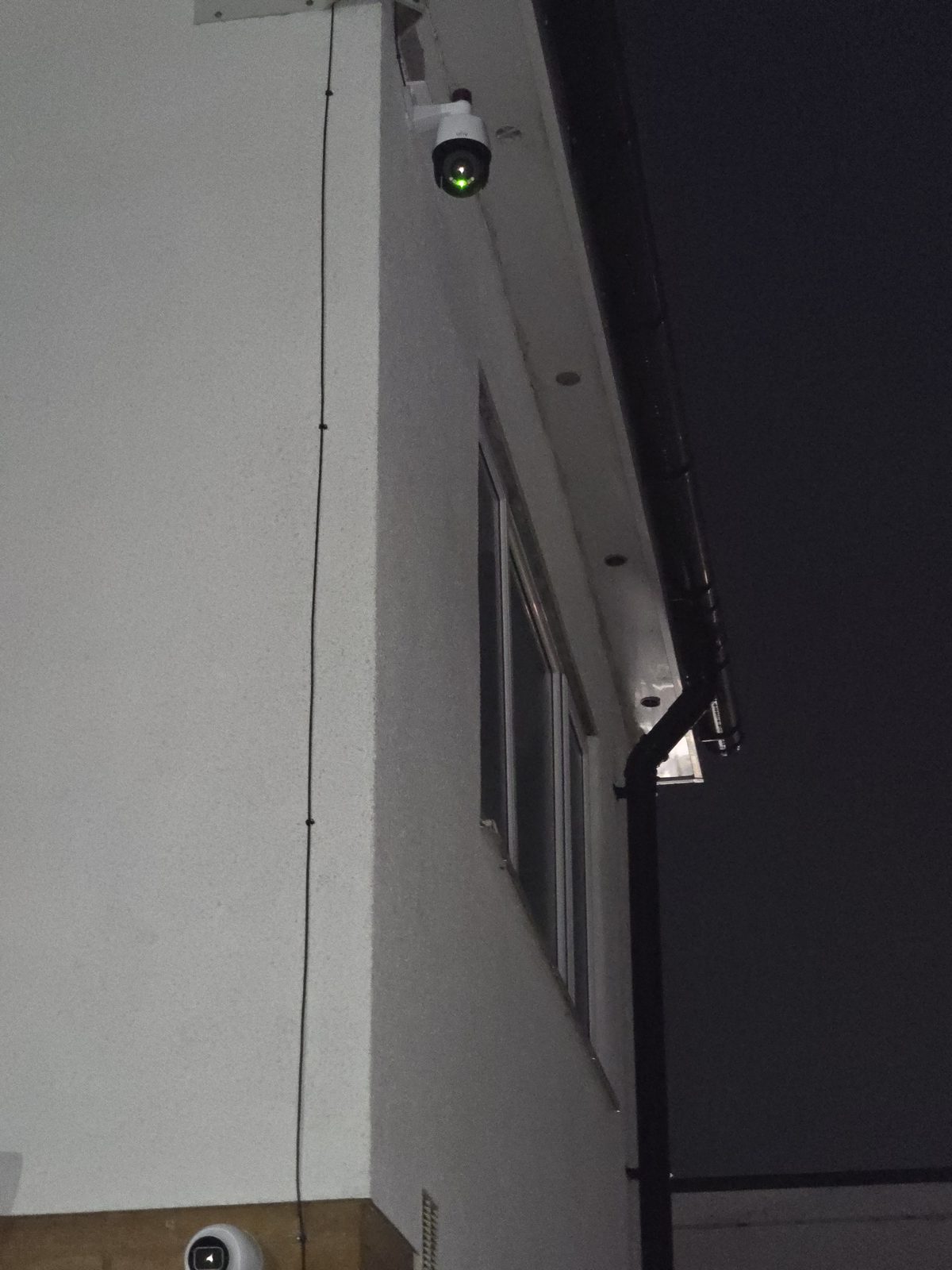
Do you need cameras covering every wall?
Usually not. Continuous perimeter coverage can make sense for particular sites, but most homes do not need a camera pointing along every elevation simply to remove every theoretical blind spot.
A proportionate residential design normally prioritises likely approaches and vulnerable access points. If an area cannot be reached without first passing through another useful camera view, covering it again may add little value.
Think about night-time footage before adding more cameras
A position that looks excellent in daylight can become poor at night because of reflections, nearby walls, soffits, bright security lights or vehicle headlights. Before increasing the camera count, make sure the planned views can work under the conditions that matter.
This is another reason a real site design beats a camera-count formula. Moving one camera may solve a coverage problem that somebody else would try to solve by adding two more.
What about recording capacity?
More cameras also create more video to store. Storage requirements depend on the cameras, recording settings, frame rate, resolution, compression, activity and how long you need footage to remain available. There is no sensible universal rule such as "four cameras always gives 30 days".
The recorder and storage should be sized around the actual design. If you already have a system and are finding gaps or missing playback, our guide to CCTV that is live but not recording explains the fault path to check.
Should you leave spare capacity for another camera later?
It can be sensible to leave room for future expansion when choosing the recorder or network layout, especially if an extension, gate, garage or other area may be added later. But spare capacity is not a reason to install unnecessary cameras now.
The aim is a system that suits the property today while avoiding a needless rebuild if there is an obvious future requirement.
How we decide the camera count on an installation
- Walk the site and identify entrances, approaches and genuine risks.
- Agree what the customer actually wants to see or prove from each area.
- Choose positions that provide useful angles rather than simply maximum coverage.
- Check cable routes, PoE/network requirements and the recorder location.
- Remove duplicate or low-value camera positions from the design.
- Size the recorder and storage around the final system rather than a generic package.
If you are comparing quotations, ask what every proposed camera is there to achieve. A clear answer is more useful than being told that a property of your size "needs six".
What to include in your camera plan
Keep detailed security plans private. Agree what each camera needs to show, avoid unnecessary views beyond the property, and record how the final layout performs. These are planning principles; no customer layout is reproduced here.
- A stated purpose for every proposed view.
- Privacy exclusions, masking decisions and the areas deliberately left outside the frame.
- Day and night test results for each view after installation.
- The recording settings, storage calculation and required retention period.
- The final installed camera count and any positions removed from the first design.
So, how many CCTV cameras do you need?
Enough to cover the routes and areas that matter with useful images — and no more than that just for the sake of a bigger specification. For some homes that is a small system. For others, side access, outbuildings and multiple approaches genuinely justify more cameras.
If you want the positions planned before buying equipment, our CCTV installation service in Stockport, Greater Manchester and Cheshire is based around that design-first approach. You can also read our guide on where CCTV cameras should be positioned for the next part of the planning process.
Frequently asked questions
How many CCTV cameras does a house need?
There is no fixed number. Count the entrances, approaches and areas where useful evidence is needed, then see which can be covered properly from shared positions. Similar-sized houses can need different camera counts because their access routes are different.
Are four CCTV cameras enough for a house?
Four may be plenty for one property and the wrong number for another. The important test is whether the proposed views cover the actual front, rear, side or outbuilding risks without leaving important gaps or duplicating the same area.
Do I need CCTV on every side of my house?
Not automatically. Many homes are better served by prioritising likely approaches and vulnerable access points instead of trying to film every external wall.
Can one CCTV camera cover a driveway and front door?
Sometimes, if the angle and distances allow both areas to be useful. If the combined view makes people too small or creates a poor angle at the door, two purposeful views can be better than one very wide camera.
Should I buy an 8-channel NVR even if I only need a few cameras?
Recorder choice should consider the current design and realistic future expansion. Spare capacity can be useful, but it should not be used as a reason to install cameras that have no clear purpose.
Clear written quotation before any chargeable work. Short-notice appointments may be available across Stockport, Greater Manchester and Cheshire.