
Quick answer
A Wi-Fi site survey is a structured check of how wireless coverage, interference, capacity and the building itself affect the network. A business does not automatically need a full survey before every access-point install, but it becomes much more useful when the site is large, busy, difficult to cover, already unreliable or carrying services that cannot tolerate random dead spots.
A lot of Wi-Fi problems get treated as a shopping problem: buy a stronger router, add another mesh node or fit more access points. Sometimes that works. Sometimes it gives you more radios competing with each other while the original problem is still there.
A site survey changes the order. Instead of choosing equipment first, you look at the building, the users, the wired network and the radio environment, then decide what actually needs to be installed or changed.
What does a Wi-Fi site survey actually check?
The exact depth depends on the site and the problem, but a practical business Wi-Fi survey normally looks at four things: coverage, interference, capacity and infrastructure.
Signal strength is only one part of the answer
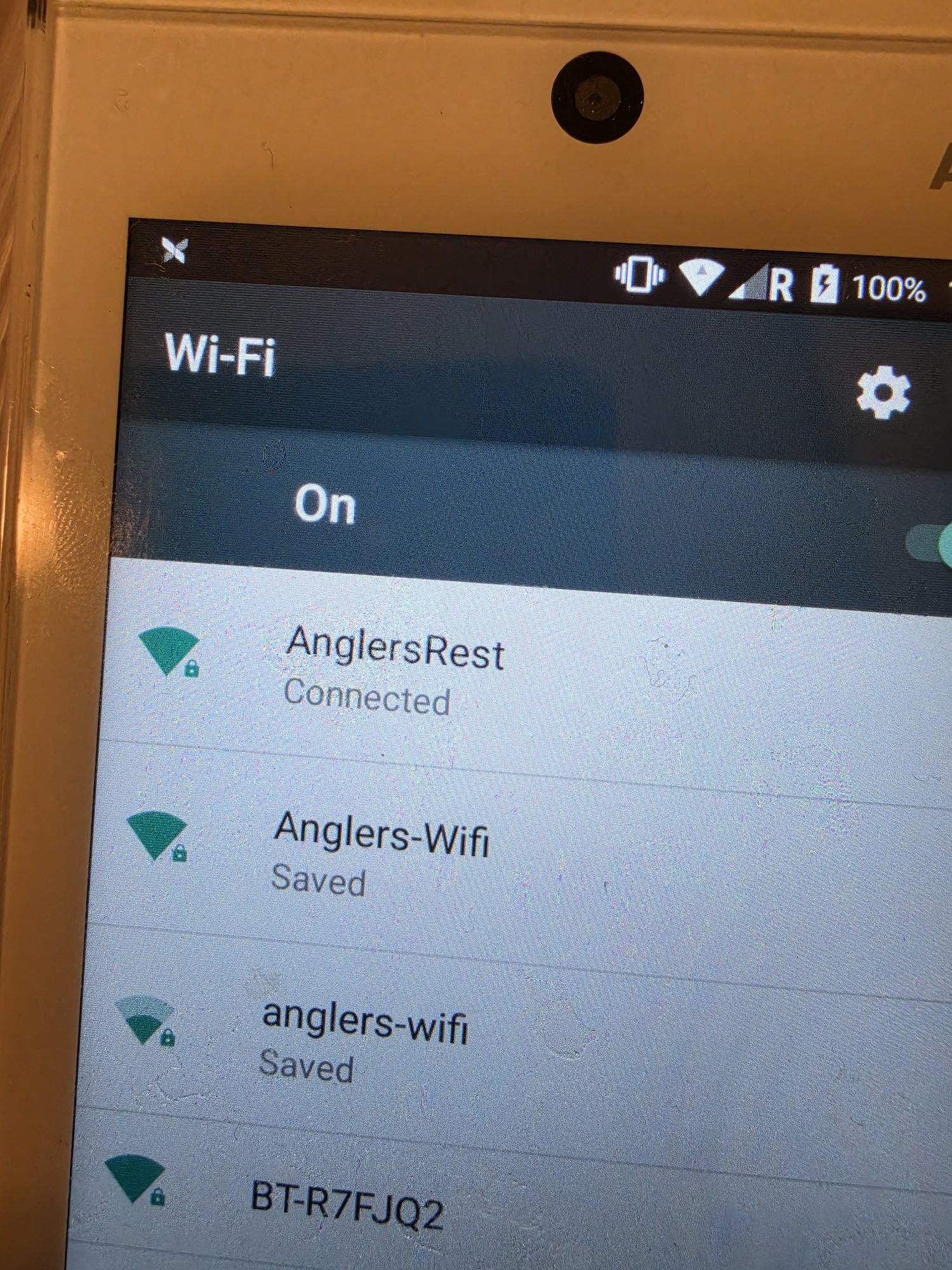
A phone showing several Wi-Fi bars does not prove that the connection is healthy. Two access points can overlap badly, a channel can be congested, a wireless mesh backhaul can be weak, or the local network can be fine while the internet connection itself is dropping.
That is why a useful survey combines radio measurements with real tests. We want to know what happens to actual devices in the areas where people work, call, scan, stream or move around — not just whether a laptop can see the SSID.
If wired devices also fail, our business network troubleshooting sequence explains how to separate cabling, switching and incoming-service faults before concentrating on Wi-Fi.
When does a business genuinely benefit from a survey?
Not every small office needs a formal survey document. If there is one simple floor, a handful of users and an obvious wired access-point position, the sensible answer may be straightforward.
A survey becomes more valuable when the building or the requirement stops being straightforward.
- Care homes, clinics and multi-room premises where users move around and coverage gaps become operational problems.
- Warehouses, workshops and industrial units where metalwork, racking and large open spaces change the radio environment.
- Offices with several access points where roaming, capacity and channel planning matter more than raw range.
- Sites with repeated dropouts where equipment has already been replaced without fixing the fault.
- VoIP or Wi-Fi calling where poor roaming becomes obvious because calls expose interruptions that web browsing can hide.
- Guest and staff networks where the design also needs sensible separation, switching and security rather than only coverage.
What is the difference between a predictive survey and an on-site survey?
A predictive design uses plans, construction assumptions and expected usage to model likely access-point positions before installation. It is useful at the planning stage, especially for new premises or refurbishments, but it still relies on assumptions about the real building.
An on-site survey measures the actual environment. Existing access points can be tested, dead areas confirmed and difficult materials or interference identified. On more important deployments, planning and on-site validation work best together: design first, then prove the finished network behaves as expected.
Do you always need specialist survey software?
No. The right level of testing should match the job. A small office fault does not need a huge enterprise report simply to look impressive, and a large multi-building site should not be designed from one speed test beside the router.
We prefer proportionate testing. The aim is to gather enough evidence to make the next decision confidently, then stop. That may mean focused measurements and wired control tests on a small site, or a more structured survey across a larger deployment.
Can a survey show whether you need more access points?
Yes — but sometimes the answer is that you need fewer radios, better positions or proper wired backhaul rather than more hardware.
An access point placed in the wrong room can create a strong signal where nobody needs it and leave the important area weak. Mesh nodes placed inside an existing dead zone can also have a poor connection back to the rest of the network. A survey helps separate placement problems from genuine capacity problems.
What should happen after the survey?
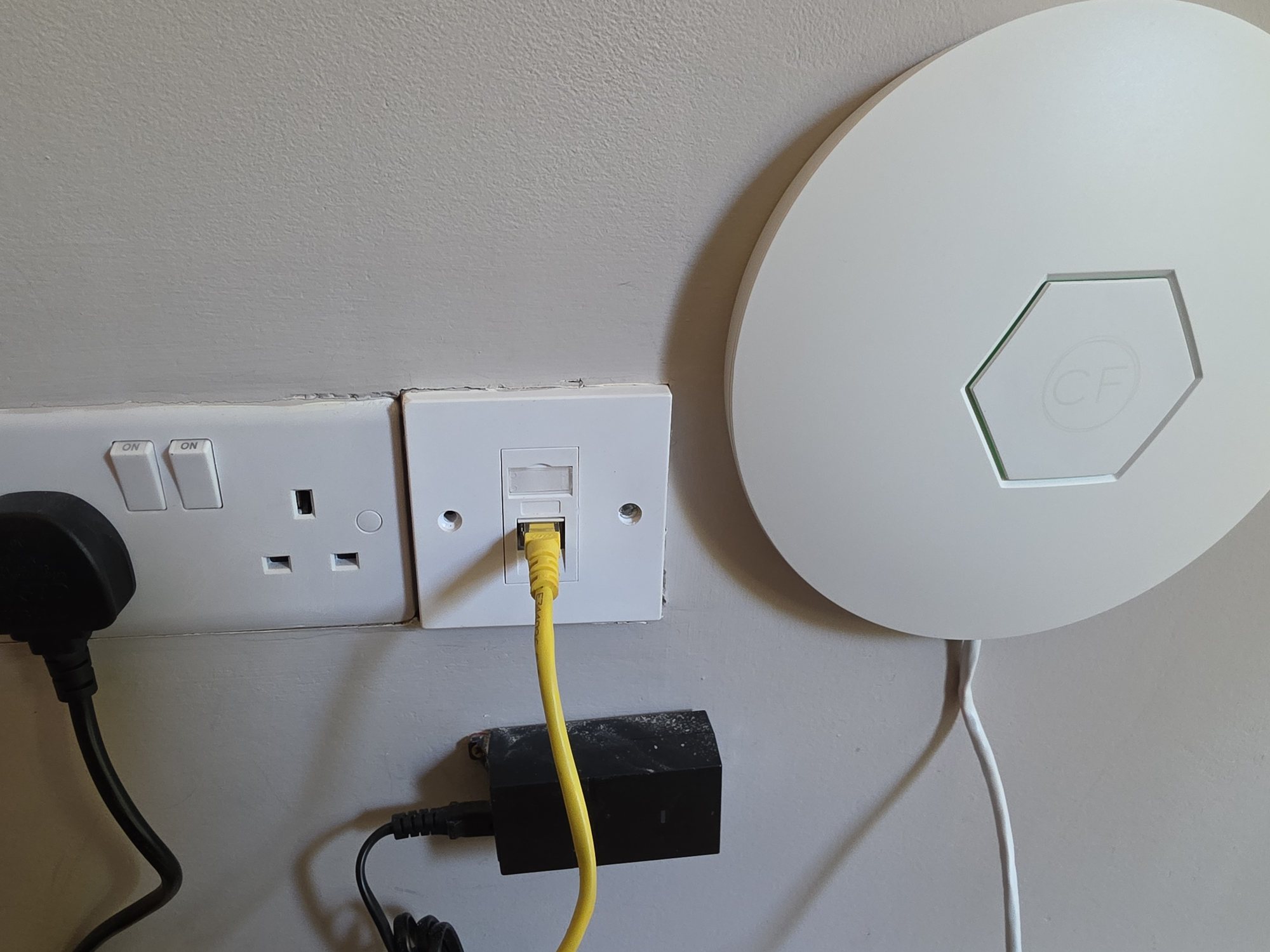
The useful output is a clear plan, not a folder full of graphs with no decision attached. Depending on the site, that might mean moving an access point, adding Cat6, changing channel planning, replacing a weak wireless backhaul, separating networks or fixing an upstream fault before touching the Wi-Fi at all.
For businesses that need the wider network designed as one system, see our commercial network installation service. If the wider issue is internet delivery, failover or connectivity into the premises, our business internet solutions page covers that side separately.
What does “Free Survey & Quote” include?
Our free first step is a brief, non-invasive assessment to understand the site, the symptoms and the likely scope, followed by a quotation where the requirement is clear. It may include a walk-through, discussion of users and devices, and focused checks that do not require a formal measurement campaign. It is not presented as a predictive heatmap, a full on-site radio survey or an engineering report.
If the initial visit shows that predictive work, extensive measurements or a formal report are needed, we define that scope and any cost before proceeding. Calling every visit a “site survey” would blur materially different levels of work, so the quotation names the assessment and its deliverables.
How we approach a business Wi-Fi survey
- Start with the complaint or requirement. Coverage, speed, roaming, capacity and internet faults are different problems.
- Walk the site. Construction, room use, cabling and access-point positions matter before any measurement is meaningful.
- Test the existing network. Compare problem areas, healthy areas and wired performance where practical.
- Check the infrastructure. Switches, PoE, uplinks and existing cable routes may limit the design.
- Recommend only what the evidence supports. More equipment is not automatically the answer.
- Validate after changes. The finished network should be checked where people actually use it.
So, does your business need a Wi-Fi site survey?
If the site is simple and the requirement is obvious, probably not a huge formal exercise. If several rooms, floors, access points, moving users or repeated faults are involved, surveying first can prevent a lot of guesswork and unnecessary equipment.
Evolution Data & Digital works across Stockport, Greater Manchester and Cheshire on business Wi-Fi, networks and cabling. If you are not sure whether your site needs a survey or simply a focused fault visit, we can start with the problem and recommend the proportionate next step.
Frequently asked questions
What is a Wi-Fi site survey?
It is a structured assessment of wireless coverage, interference, capacity, roaming and the network infrastructure supporting the access points. The depth should match the size and importance of the site.
Do I need a Wi-Fi survey before installing access points?
Not always. Small simple sites can be straightforward, but a survey becomes much more useful on larger, multi-floor, high-density or difficult buildings where guessing access-point positions creates avoidable risk.
Can a Wi-Fi survey find dead spots?
Yes, but it should also explain why they exist. Weak coverage can come from building materials, access-point placement, interference, poor backhaul or a wider network fault.
Does a Wi-Fi survey test internet speed?
Internet testing can be part of diagnosis, but broadband speed and Wi-Fi performance are separate things. A good survey uses wired or close-range control tests where practical so the two are not confused.
Can you survey an existing business Wi-Fi network?
Yes. Existing networks can be assessed for coverage, roaming, interference, access-point placement and the wired infrastructure behind them before deciding whether anything needs replacing.
Clear written quotation before any chargeable work. Short-notice appointments may be available across Stockport, Greater Manchester and Cheshire.