
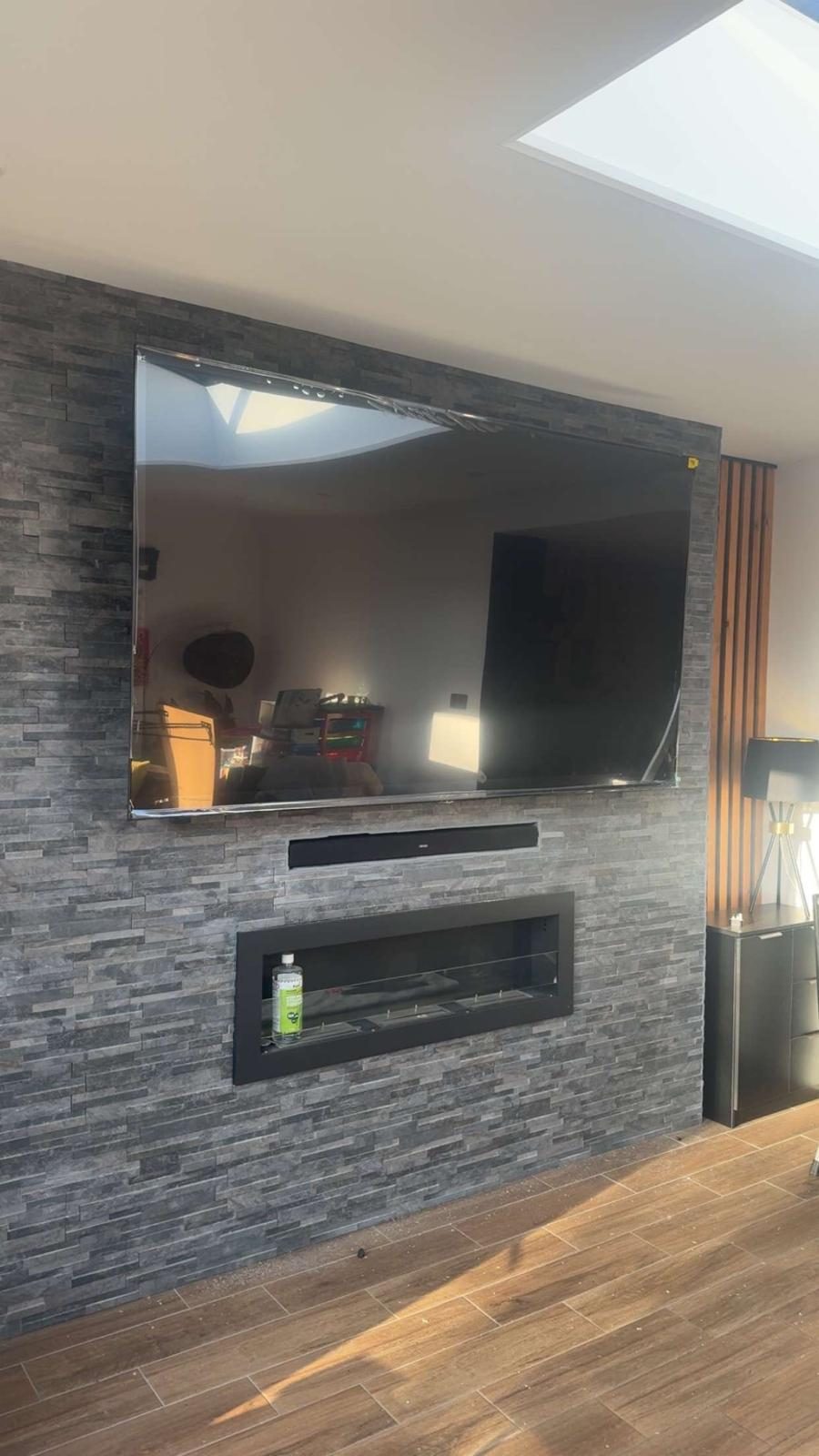
A television can be wall-mounted only when the exact TV, bracket, wall construction, fixings, hidden-service risk and installation position work as one verified system. Screen size, a VESA pattern or a wall that “feels solid” is not enough evidence on its own.
Check the TV and its manual first
- Confirm the full model number and whether the manufacturer permits wall mounting.
- Use the manual's specified bracket type, VESA pattern, screw diameter, thread engagement and any supplied spacers.
- Use the documented TV weight without its stand, then include the bracket and any attached equipment in the design load.
- Keep the manufacturer's ventilation, orientation, service-access and cable-bend requirements.
- Use a model-specific mount where the manufacturer requires one; VESA holes do not make every bracket suitable.
Check the bracket as a separate component
The bracket must support the exact VESA pattern, combined load and intended movement. Its published rating is valid only with the wall type, fixings, installation method and extension limits covered by its instructions. A full-motion arm creates different leverage from a flat mount, so a weight figure alone is not approval.
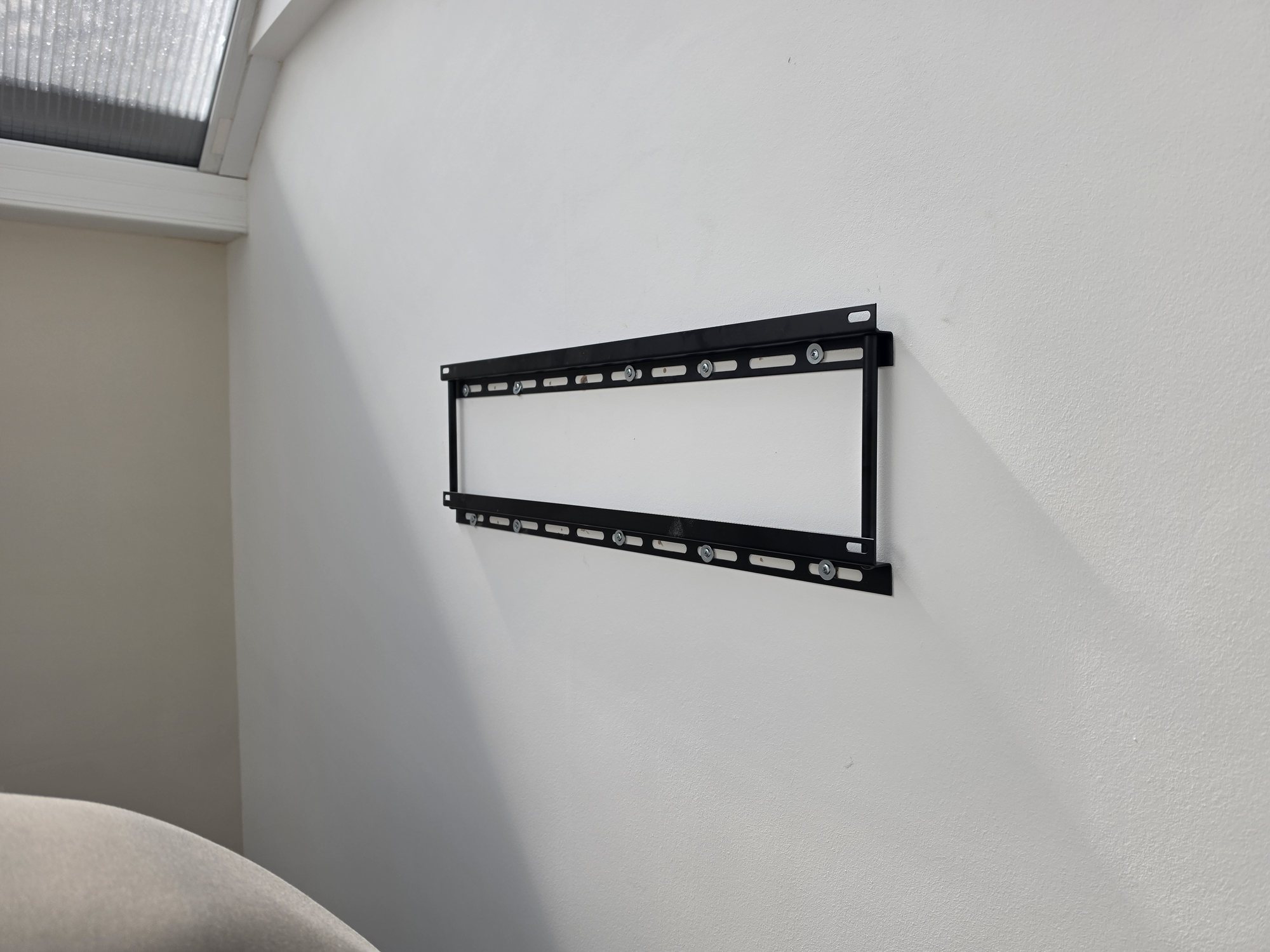
Identify the wall construction — do not guess from the surface
Solid masonry
Brick or block can provide a suitable fixing base, but its condition, edge distances, mortar, plaster thickness, voids and the selected anchor still matter. A chimney breast also needs its flue condition and drilling depth considered.
Timber or metal stud partitions
Locate and verify the framing, noggins or other designed support. Board-only fixings are not automatically excluded or approved: any fixing system must explicitly cover the board, cavity, load and bracket geometry involved. Metal studs and unknown framing need their own design rather than being treated like timber.
Dot-and-dab and dry-lined masonry
The board, void and masonry behind it must be confirmed. The fixing method needs to transfer the load without crushing the board or relying on an assumed gap. Wall condition and anchor instructions decide the method.
Media walls and false walls
A media wall is suitable only when its frame, backing, fire and ventilation details were designed for the actual TV and bracket. A finished surface does not prove there is structural support at the required fixing points.
Hidden services and building materials are stop points
Before drilling, review available plans, inspect both sides where possible and use suitable detection for cables, pipes and other hazards. The HSE guidance on work near electricity (checked 4 September 2026) warns that detectors have limits; if the route cannot be established, stop and involve a competent person. Suspected asbestos, a concealed flue, structural damage or uncertain services also stops the installation until the risk is resolved.
Above a fireplace needs two separate approvals
First prove the wall and fixings. Then follow the current TV manufacturer's ventilation and temperature limits and the fire or appliance manufacturer's clearances, heat-output and installation instructions. Check the proposed position under representative operation where appropriate. If the required documents, clearances or temperature limit cannot be established, do not mount the TV there.
Viewing height and glare are separate comfort decisions. A structurally possible position can still be unsuitable to watch, so agree the seated eye line and bracket movement before drilling.
EDD installation and handover checklist
- Record the TV model, weight and manufacturer instructions
- Record the bracket model, rating, VESA compatibility and movement
- Identify the wall construction and selected fixing system
- Check available service information and scan the complete drilling area
- Agree power, data, aerial, HDMI and ventilation routes without unsafe hidden flexible leads
- Confirm fireplace or heat-source documentation and limits where applicable
- Function-check the mount, cables, picture, audio and agreed devices before handover
See our TV wall-mounting service for documented installations, the plasterboard wall-mounting guide for that wall-specific decision, or the Sky Glass wall-mounting page for that product-specific scope.
Frequently asked questions
Can any TV be wall mounted?
No universal yes is safe. Check the exact model manual, mounting interface, weight, required spacers and ventilation, then match those requirements to a suitable bracket, wall and fixing design.
Is it safe to mount a TV on plasterboard?
Potentially, after the complete wall construction and support are verified. The board, studs or backing, cavity, fixing instructions, bracket leverage and combined load all matter; plasterboard appearance alone cannot answer it.
Can I mount a TV on a dot-and-dab wall?
Potentially. Confirm the board, void, masonry and wall condition, then use a fixing method designed to transfer the load without crushing the board. Do not choose fixings from an assumed gap.
Can a TV go above a fireplace?
Only when the wall design and the current TV and fire/appliance instructions all permit the position. Verify clearances, ventilation and temperature limits; if the evidence is missing, choose another position.
How do you check for hidden cables before drilling?
Use plans and visible clues, inspect both sides where possible and scan with suitable detection. Detectors have limitations, so uncertainty is a stop point rather than permission to drill.
Need help with TV signal problems in Stockport, South Manchester, Tameside or East Cheshire? Evolution Data & Digital is a local, engineer-led business — not a call centre or franchise. We test the system properly, explain the fault and agree the price before any repair or installation work begins. Call 0161 399 1757 or contact us online.
Clear written quotation before any chargeable work. Short-notice appointments may be available across Stockport, Greater Manchester and Cheshire.