
Quick answer
Large holiday parks need a dependable site backbone before extra WiFi access points are added. Fibre is often useful for longer or separate-building links, Cat6 or Cat6A suits many local Ethernet runs, and point-to-point wireless can bridge suitable locations where a physical route is impractical. The right mix depends on distance, pathways, capacity and permanence.
A park network can become difficult to support when each new lodge block, office or facility is extended from whatever connection happens to be nearby. A planned backbone gives remote access points, switches, cameras and other network devices a known route back to the core.
Use fibre for suitable longer or building-to-building backbones
Fibre can provide high-capacity links between cabinets or buildings while providing electrical separation. The fibre type, route, termination and optics need to match the switching and the required capacity.
Use Cat6 or Cat6A for appropriate local Ethernet runs
Copper Ethernet is practical for many access points, cameras, desks and local devices where the route and channel length are suitable. The category should be chosen from the actual link requirement, PoE and installation pathway rather than simply picking the highest specification.
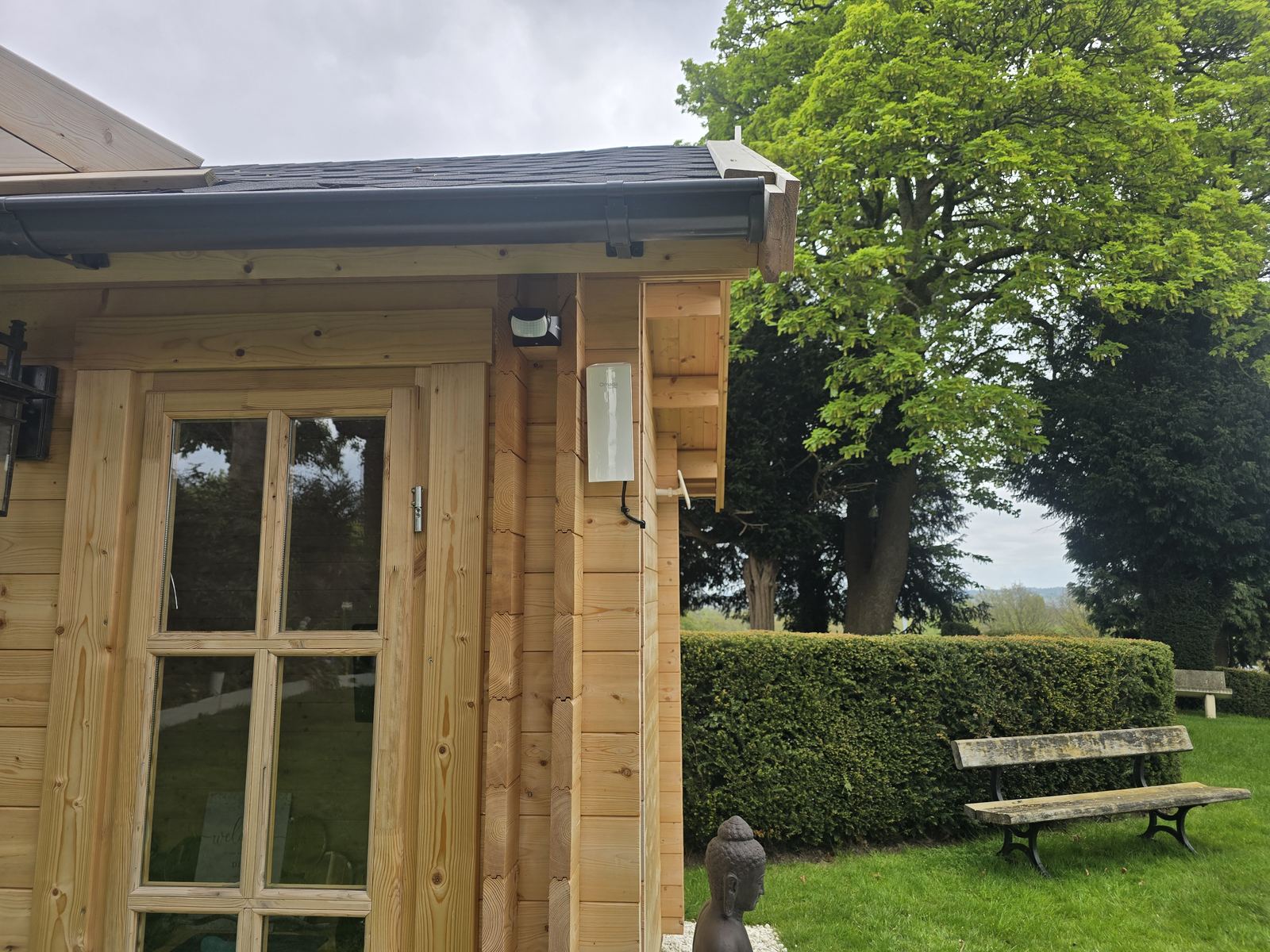
Use point-to-point wireless where a physical route is impractical
A matched wireless bridge can connect suitable buildings or network points where trenching or ducting would be disruptive or disproportionate. Line of sight, distance, mounting, spectrum conditions and the required capacity all matter.
Switching and PoE belong in the same design
Access points and cameras may share PoE switching, but the switch still needs compatible ports, power budget and uplink capacity. The cabinet, patching and labels should remain understandable for future support.
Avoid extending faults through unmanaged daisy chains
A remote area may appear to work until one cheap switch, damaged link or overloaded uplink fails. A planned topology reduces hidden dependencies and makes faults easier to isolate.
For a complete site assessment, see our Holiday Park WiFi & Connectivity service, or Remote Site Connectivity for wider multi-building infrastructure.
Frequently asked questions
Is fibre better than wireless for a holiday park?
Neither is universally better. Fibre is attractive where a permanent physical route exists and high-capacity backbone connectivity is needed. Wireless bridges can be proportionate where trenching is impractical and the radio path is suitable.
Can existing ducts or network cabling be reused?
Potentially. Existing infrastructure should be inspected for route, condition, ownership, access and suitability before it is relied on for a new design.
Can the park network be upgraded in phases?
Yes, where each phase leaves a supportable topology. Backbone, switching and WiFi dependencies should be planned before work is split into stages.
Clear written quotation before any chargeable work. Short-notice appointments may be available across Stockport, Greater Manchester and Cheshire.