
Treat the park as one connectivity system, not a collection of separate routers
A site can have good internet at reception and still provide a poor experience elsewhere. Long distances, separate buildings, outdoor areas, caravans or lodges, seasonal device numbers and legacy extensions all affect the design. We start with the services and areas that matter, then work backwards through WiFi coverage, backbone links, switching and the incoming connection.
- Reception and office connectivity
- Guest WiFi in agreed communal or accommodation areas
- Staff and operational devices
- CCTV, VoIP or other IP equipment using the site network
- Outdoor facilities and leisure areas
- Separate buildings, lodges, workshops or maintenance areas
Plan guest WiFi around the areas guests actually use
Guest coverage needs a clear brief. A reception lounge, bar, lodge cluster and outdoor seating area are different radio environments. The useful starting point is to define where service is expected, how many devices may be active and how those areas connect back to the network. Our holiday park and caravan park WiFi design guide explains the coverage and capacity questions worth answering before hardware is chosen.
Choose the incoming internet separately from the local WiFi
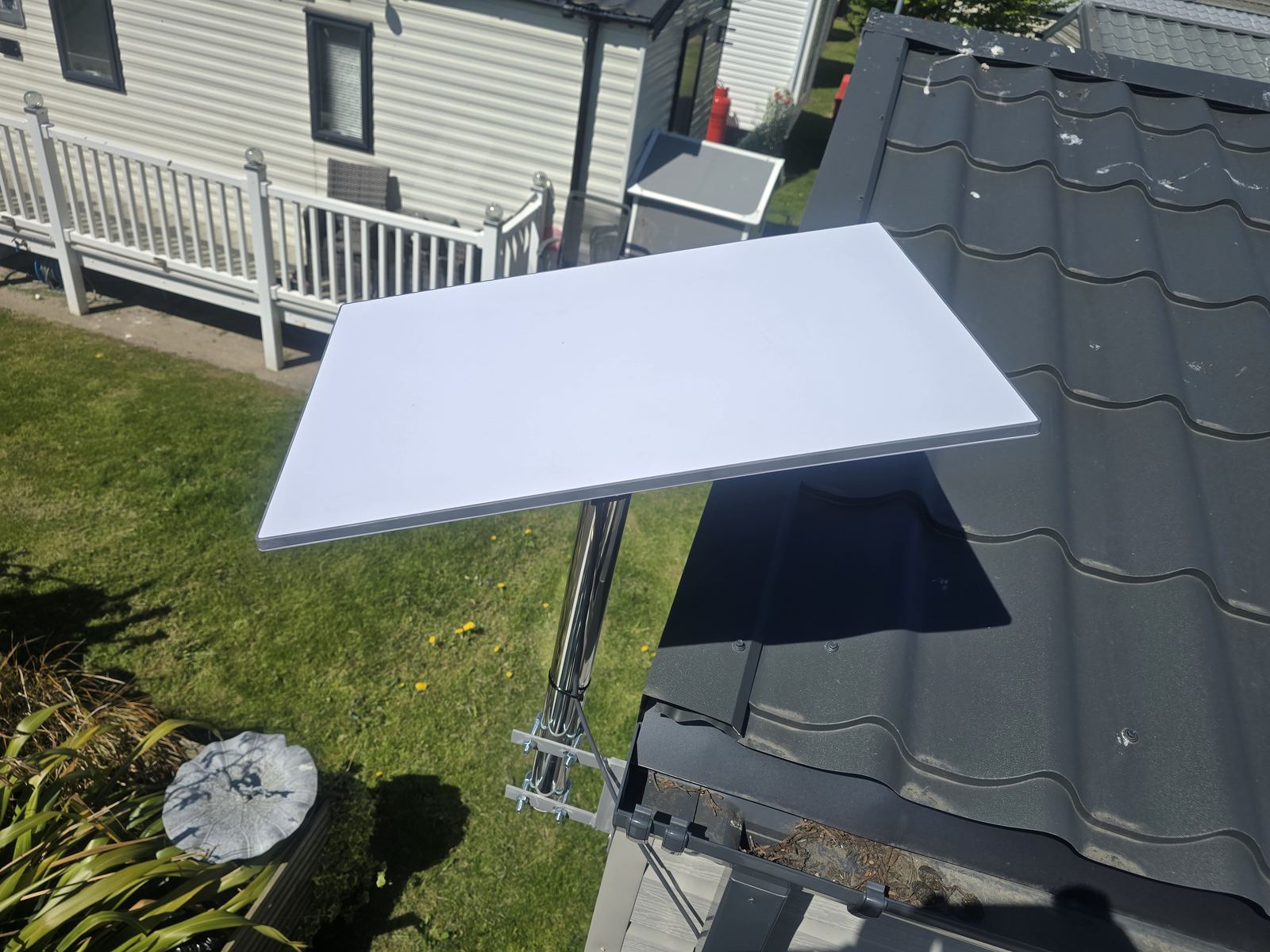
Poor park WiFi and poor internet are not the same fault. Where a suitable fixed service is available, that may be the right primary connection. Rural or awkward sites may also justify Starlink or a suitable 4G/5G connection. If the park depends on cloud systems, phones or card payments, a separate backup path may be worth assessing. Our holiday park internet and failover guide compares the roles of the main connection and backup rather than treating one technology as universally best.
Build a dependable backbone between the important parts of the site
Access points still need a dependable path back to the core network. Depending on the route and distance, that may use fibre optic network cabling, structured cabling or point-to-point wireless. The switching, PoE, cabinets and uplinks are planned with the WiFi rather than bolted on afterwards. Read our site-backbone guide for fibre and wireless building links for the main trade-offs.
Outdoor WiFi needs outdoor-rated equipment and realistic coverage targets
Outdoor areas can be served with appropriately rated access points where the mounting position, cable route and environment suit the design. We do not quote a universal range because client devices, obstructions, terrain, foliage, buildings and local radio conditions all affect usable coverage. Our Outdoor WiFi service explains the installation principles we apply to outdoor access points.
Separate guest, staff and operational traffic where the equipment supports it
A separate network name is not the same as proper separation. Where appropriate, compatible gateways, managed switches and access points can use VLANs, firewall rules and guest controls to keep agreed traffic groups apart. We define the access requirements with the park or its IT provider and test the intended boundaries rather than assuming every device belongs on one flat network.
Design for busy periods, not just a quiet weekday test
Holiday-park usage can change sharply with occupancy. Coverage is only one part of the brief: access-point capacity, upstream internet capacity, switching and the number and type of active devices also matter. We design from the expected operating conditions and explain where the internet service, radio environment or third-party devices remain outside our control.
Connect reception, facilities, lodges and separate buildings without fragile daisy chains
Larger parks often grow through years of additions. An unmanaged switch feeding another unmanaged switch or a long chain of wireless extenders can make faults difficult to trace. For a wider multi-building design, our Remote Site Connectivity service brings the incoming connection, permanent site links and local WiFi into one supportable topology.
Use existing equipment where it is still suitable
A holiday park does not automatically need a full rip-and-replace project. Existing cabinets, cabling, switches or access points can be retained where they are suitable, accessible and supportable. We identify what is actually limiting the site before recommending replacement, then phase the work where a staged upgrade is practical.
Plan resilience around the services the park cannot easily lose
If reception systems, VoIP, payment services or other operations depend on connectivity, resilience should be scoped deliberately. Our Business Internet service covers primary and backup connectivity. Failover can reduce disruption, but sessions may need to reconnect when the WAN path changes and backup equipment still depends on power and compatible network hardware.
Clear ownership after handover
At completion we agree what EDD has installed, what administration access is handed over and what remains with any ISP, booking-system provider, CCTV company or IT/MSP. Suitable managed equipment can also sit under an agreed network-support scope so the site has a clear route when something changes later.
Holiday park and caravan site connectivity across the North West
Evolution Data & Digital is Stockport-based and takes on suitable higher-value connectivity projects across Greater Manchester, Cheshire, Lancashire and the wider North West. Send the site postcode and a short outline of the park, buildings and coverage requirement so we can confirm whether the project is a sensible fit.
Holiday park WiFi & connectivity planning guides
Three practical guides covering guest WiFi, primary and backup internet, and the fibre or wireless backbone across a larger site.