
Quick answer
There is no universal height that every TV should be mounted at. For a normal seated living-room setup, a sensible starting point is to place the centre of the screen around the viewers' natural seated eye line, then adjust for screen size, sofa position, furniture, soundbars, fireplaces and the way the room is actually used. Measure from your own seating position rather than copying a fixed height from the internet.
"How high should a TV be mounted?" is one of the most common questions we get before a wall-mounting job, and it is also one of the easiest questions to answer badly. A fixed measurement such as "the centre must be X centimetres from the floor" ignores the height of the sofa, the size of the television, how far away you sit and whether the room is a lounge, bedroom, kitchen or something else.
The useful approach is to start with how people actually watch the screen, then work backwards to a mounting position that looks balanced and remains comfortable.
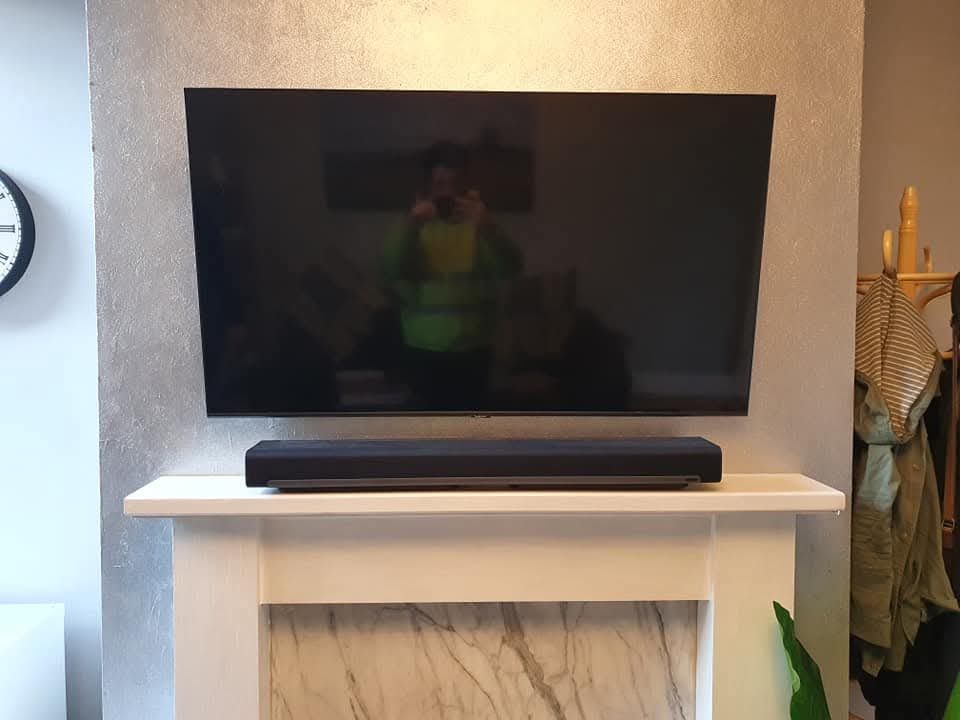
The simplest starting point: seated eye line and screen centre
Sit where you normally watch television and look straight ahead in a relaxed position. That gives you a real-world eye-line reference. For a conventional living room, placing the screen centre somewhere around that natural line is a much better starting point than measuring from the floor without anybody sitting on the sofa.
It is a starting point, not a rule. Many installations need to move slightly higher because of a media unit, soundbar, fireplace, furniture or the visual proportions of the wall. The important thing is understanding why you are moving it rather than automatically hanging every television at the same height.
A quick way to work out a first position
- Sit in the main viewing seat in your normal posture.
- Measure roughly where your relaxed eye line meets the TV wall.
- Measure the actual height of the television itself, not just its advertised diagonal size.
- Use the centre of the physical screen as the first reference point.
- Mock the outline on the wall with removable tape or cardboard before drilling.
- Stand back and check the result from every important seat in the room.
That five-minute mock-up catches more bad height decisions than any universal mounting-height chart.
What changes the ideal TV mounting height?
Does a 55-inch TV need a different height from a 65-inch TV?
The viewing principle is the same, but the physical screen is taller. If you keep the centre at a similar eye-line reference, a larger TV extends further both upward and downward. That means the bottom of a 65-inch or 75-inch screen may sit lower than somebody expects when comparing it with a smaller television.
This is why "bottom of TV must be X from the floor" is a poor universal rule. It changes with screen size even before we consider the room.
How high should a 75-inch or 85-inch TV be mounted?
Large televisions amplify positioning mistakes. Mount one too high and the upper part of the screen can dominate the room; mount it without checking the bracket geometry and the finished TV may land somewhere different from the outline you marked.
With larger screens we pay particular attention to the physical TV dimensions, VESA mounting-hole position and where the bracket sits on the television. The bracket is not always centred vertically on the screen, so drilling from the intended screen centre without checking the actual hardware can produce the wrong finished height.
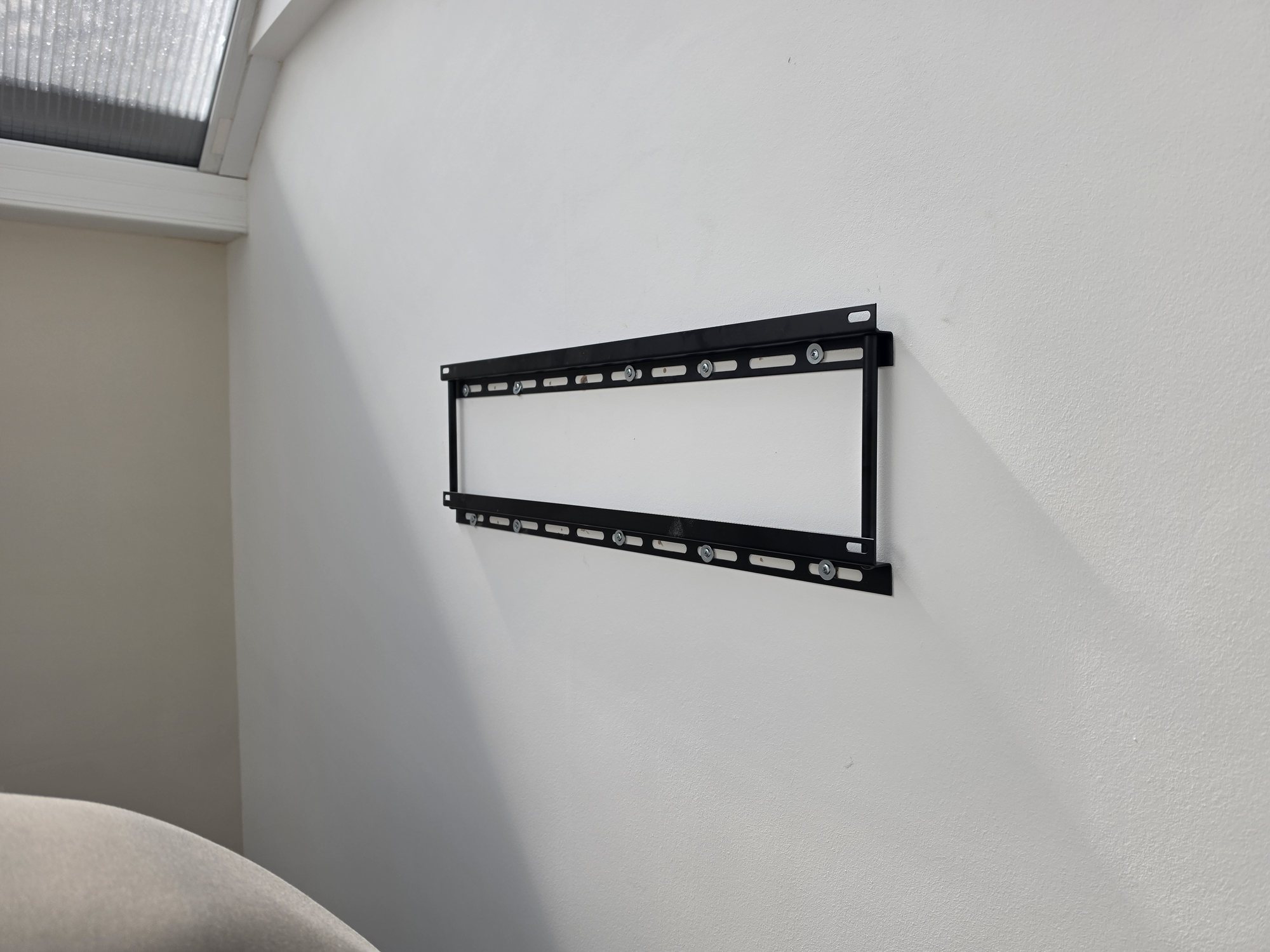
The bracket can move the finished TV higher or lower than you think
The wall plate is only one part of the geometry. The vertical arms attach to the television's VESA holes, and those holes may sit higher or lower on the back of the TV depending on the model.
A proper height calculation therefore works backwards from the desired screen position: measure the TV, fit or measure the bracket components, identify where the VESA holes sit and only then mark the wall plate. That avoids the classic mistake of mounting the bracket at the height you wanted the television centre to be.
Should a TV be higher in a bedroom?
Often, yes — but because the viewing posture is different, not because bedrooms have their own magic height. If you mainly watch while reclined in bed, your natural line of sight is usually angled upward compared with sitting upright on a sofa.
Mock the screen position while lying or sitting as you normally would. A modest tilt bracket can sometimes help where the screen genuinely needs to sit higher, but it should not be used to rescue an unnecessarily high position if the wall allows a better one.
What about a TV above a fireplace?
Fireplaces often force a compromise because the screen has to clear the feature below it. Before choosing that location, check whether the resulting viewing height is acceptable from the seating position and follow the television and fireplace manufacturers' clearance and operating guidance.
Do not rely on a universal temperature threshold for every TV or every fireplace. Different products have different requirements. Our TV wall mounting service treats fireplace installations as a property- and product-specific decision rather than promising that every setup is suitable.
How much gap should there be above a media unit or soundbar?
Enough to make the arrangement look intentional, allow the devices to work correctly and leave access where it is needed. The exact gap is a design choice rather than a technical constant.
If a soundbar is being wall mounted beneath the TV, plan it at the same time so the two stay visually aligned and the cables can be hidden sensibly. The cable route can affect the final spacing, which is why our guide to hiding TV cables is worth reading before the wall is drilled.
Why we ask customers to approve the height before drilling
TV height is partly ergonomic and partly personal preference. Two people can sit in the same room and prefer the screen a little differently. The useful job of an installer is to explain the trade-offs, calculate the actual bracket position and give the customer a clear visual reference before permanent holes are made.
We normally want the final position agreed with the customer at the wall — particularly on large TVs, feature walls and rooms where furniture creates several plausible heights.
Common TV height mistakes
- Copying a fixed internet measurement without checking the sofa or screen size.
- Measuring the bracket instead of the screen and forgetting the VESA holes are offset.
- Mounting high to "fill the wall" even though the viewing position is low and close.
- Ignoring the soundbar or media unit until after the TV is fixed.
- Choosing the height before deciding the cable route, then discovering the outlet or HDMI exit is visible.
- Not checking the real viewing posture in bedrooms, kitchens or other non-lounge spaces.
So, how high should your TV be?
Start from the seated eye line and the physical centre of the television, then adjust for the room rather than following a generic number. Mock it up, check the important viewing seats, account for the real bracket geometry and decide the cable plan before drilling.
If you want us to calculate and install the final position, see our TV wall mounting service in Stockport, Greater Manchester and Cheshire. If the wall itself is the concern, read Can You Mount a TV on Plasterboard? before choosing fixings or a bracket.
Frequently asked questions
What is the correct height for a wall-mounted TV?
There is no universal correct height. In a typical living room, start with the centre of the screen around the viewers' natural seated eye line, then adjust for screen size, furniture, soundbars, fireplaces and the room layout.
How high should a 65-inch TV be mounted?
Use the same eye-line principle as any other TV, but measure the actual physical screen because a 65-inch TV is taller than a smaller set. Keeping the centre near the same reference naturally changes the height of the bottom and top edges.
How high should a 75-inch TV be mounted?
Start with the viewing eye line, then calculate the actual screen and bracket geometry carefully. Large TVs make height errors more obvious, and the VESA holes may not be centred on the back of the screen.
Should a bedroom TV be mounted higher?
It can be, because people often watch while reclined rather than sitting upright. Test the proposed position from the actual bed posture instead of applying a separate fixed bedroom measurement.
Is a TV above a fireplace always too high?
Not always, but the fireplace often pushes the TV above an ideal eye-line-first position. Check viewing comfort and follow the TV and fireplace manufacturers' clearance and operating guidance before committing to that location.
Clear written quotation before any chargeable work. Short-notice appointments may be available across Stockport, Greater Manchester and Cheshire.