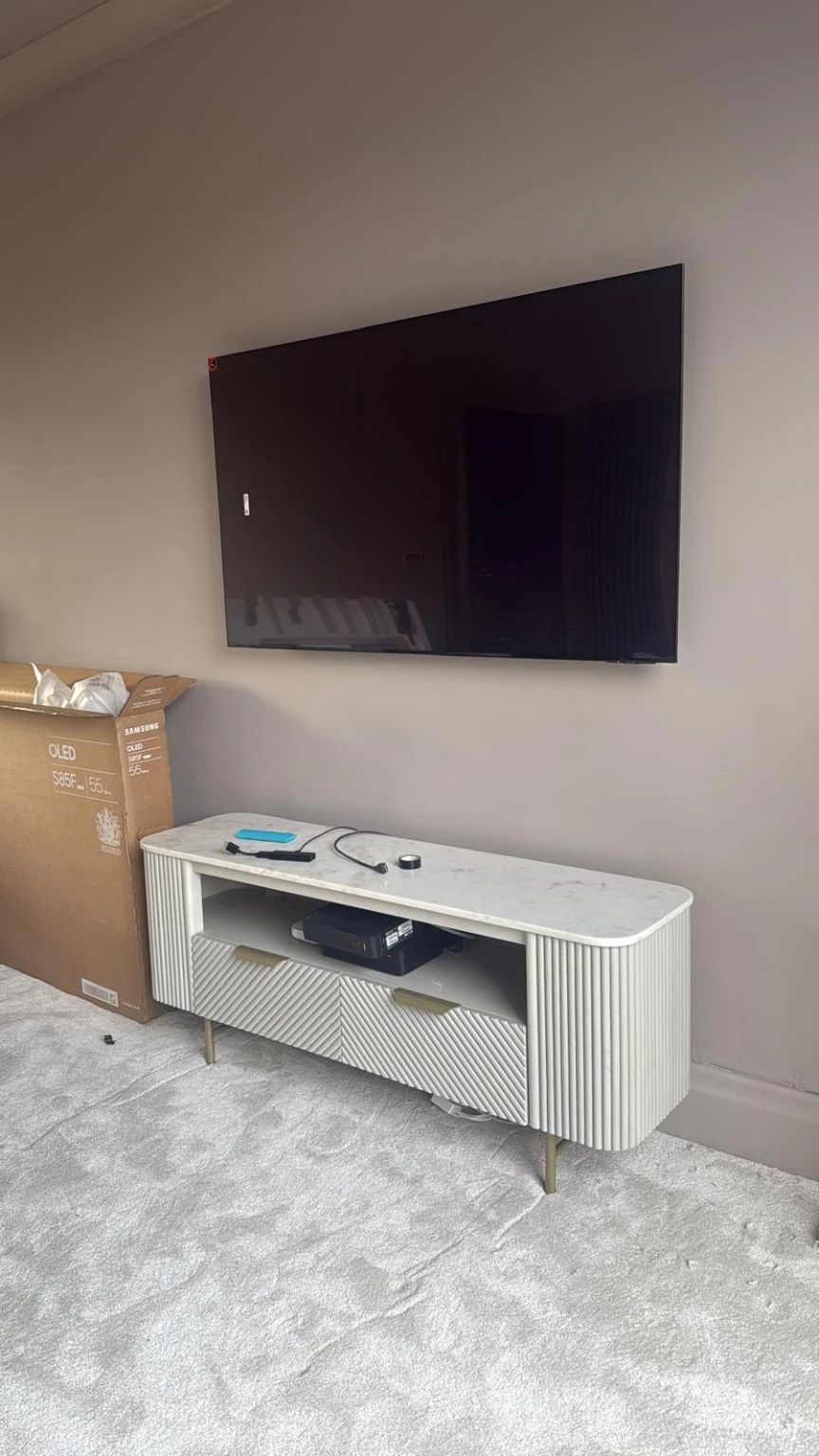
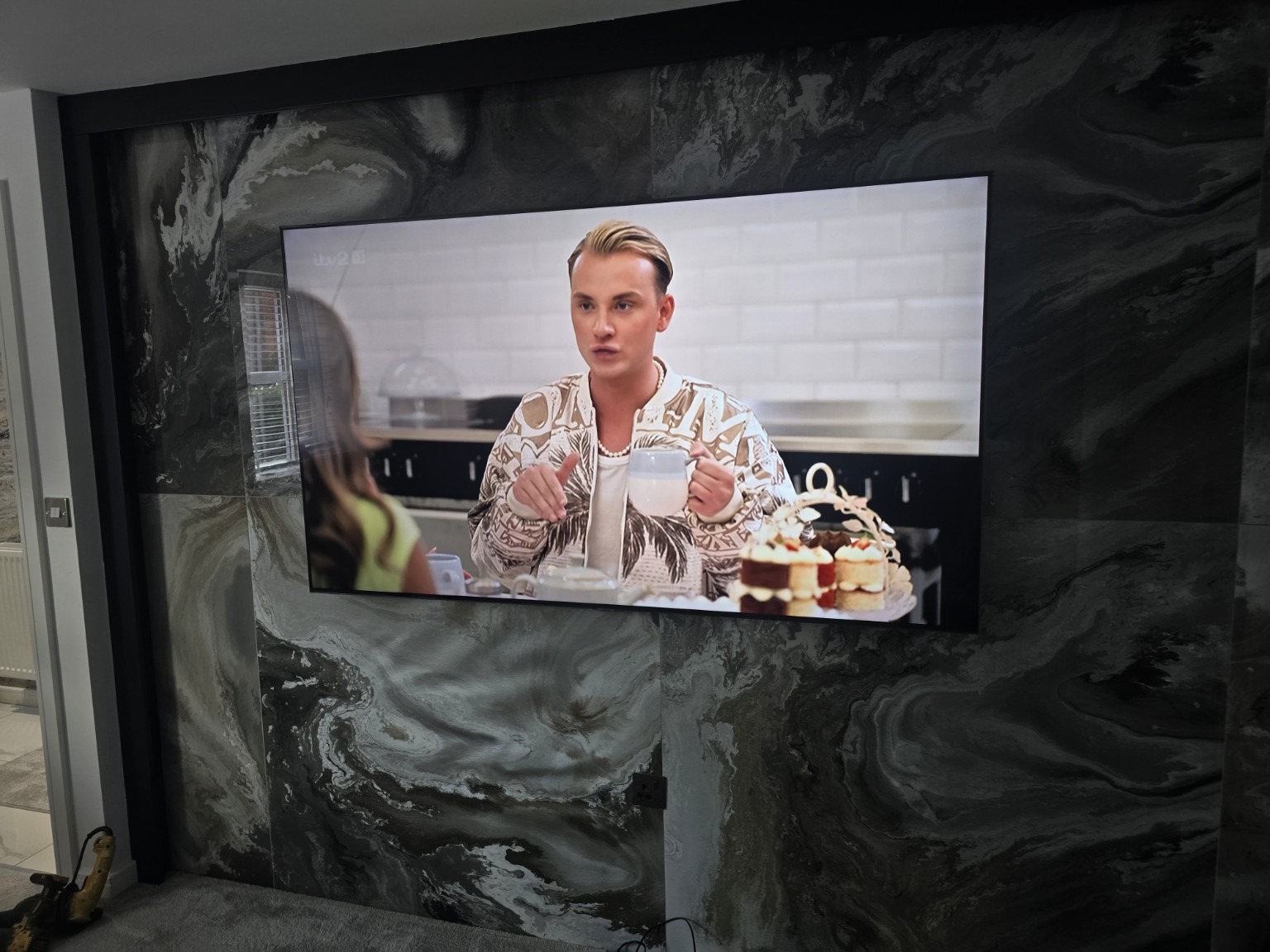
At this new-build property in Preston, Evolution Data & Digital was asked to install a 75-inch LCD television on a flat-to-wall bracket. Behind the hard porcelain tile finish was a plasterboard wall — a combination that made both the drilling and the choice of fixings more demanding than a typical installation.
Challenge one: drilling porcelain without damaging the finish
The first concern was the porcelain itself. The tiles were already installed and formed the main feature of the room. One cracked tile would be immediately noticeable, so we couldn't approach the wall as though we were drilling plain plaster or brick.
We marked the fixing positions and taped over the drilling points — a simple trick I learnt from my dad when I was younger. Starting with a small pilot hole, we worked slowly and deliberately, without using the hammer action on the drill. Once each hole had been established, we gradually increased the drill size until we reached the diameter needed for the chosen fixings.
This method took more time, but protecting the finished tiles mattered more than rushing the bracket onto the wall.
Challenge two: choosing fixings for a tiled plasterboard wall
Getting through the porcelain was only half the problem. Behind the tile finish was plasterboard, and the normal go-to plasterboard fixings were not automatically appropriate for this assembly and a large television.
The finished tiles also made the wall construction and any stud positions harder to establish. Rather than treating it as a standard plasterboard installation, we took extra time to select a mechanical fixing arrangement for the bracket and the wall we were working with.
Before tightening the bracket down, we also applied adhesive behind it as an additional supplementary measure. The primary support remained the mechanical fixings: the adhesive was not a substitute for the correct structural fixing method, and no independent adhesive load rating is claimed.
The result: a large screen against a dramatic tiled feature wall
With the bracket secured, we fitted the 75-inch television close to the black-and-grey patterned porcelain surface. The low-profile mounting helps the screen sit neatly within the feature wall while keeping the bracket out of sight behind the television.
The photographs show the installed television and the finished wall, not the drilling stages. They also show some loose cables near the floor, so this project is presented as a challenging wall-mounting installation — not as a completed hidden-cable installation.
What made the job memorable wasn't simply the size of the television. It was having to work carefully through a hard, finished surface, then consider the wall and fixings behind it rather than assuming a large bracket could be installed like any other.
Planning to mount a television on a difficult wall?
Porcelain tiles, plasterboard, stud partitions and other finished surfaces all introduce different considerations. A wall can look solid and still need a specific fixing approach behind the decorative finish.
If you're planning a large TV installation, Evolution Data & Digital can assess the wall, bracket and proposed position before recommending a sensible mounting approach.