
Quick answer
Choose the person who understands the network, not just a trade title. Many electricians are excellent at data cabling and some also design complete networks. A network engineer can help when switching, Wi-Fi, cameras, smart-home systems or outbuildings need coordinating. On a renovation or new build, the best arrangement may be both trades working from one agreed plan, with clear responsibility for design, installation and testing.
If you are planning Ethernet cabling at home, ask more than who can pull the cable. Ask who will decide where it goes, what it connects to and how the finished network will be checked. Those decisions matter to a homeowner, developer or build team long before a socket gets its faceplate.
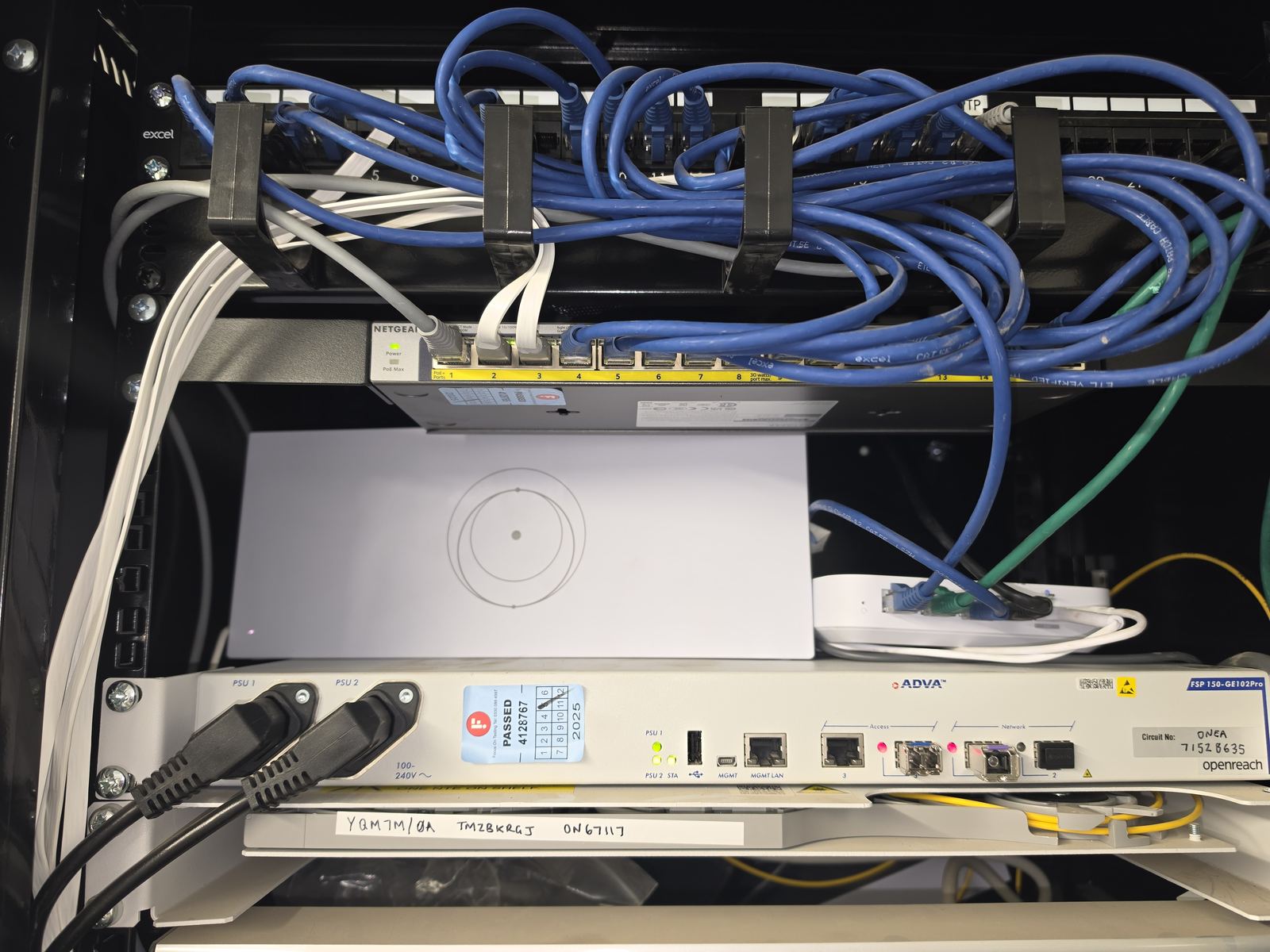
Why electrical work and network design are different disciplines
Electrical installation and network design overlap in route planning, containment and coordination with the building. They also ask different questions. A data outlet needs a usable network path behind it; a ceiling cable needs to reach a position where the selected access point can provide useful coverage.
A capable electrical contractor may understand all of this. Establish whether the proposed scope includes structured cabling topology, switching, access-point placement, Power over Ethernet (PoE), termination, testing and cabinet design. Where there are outbuildings or plans to expand, those also need an owner. Being competent to install the cable does not by itself say who has designed the complete system.
What a network engineer thinks about before the first cable is pulled
Start with how the property will be used. That turns a collection of socket requests into a network plan. Useful design questions include:
- Where does the internet enter? Identify the router and, for relevant fibre services, the optical network terminal (ONT), then plan their connection to the rest of the network.
- Where will the equipment live? Allow for the switch, patching, power, ventilation, service access and any cabinet actually needed.
- Where does each cable return? A star or home-run layout takes each planned outlet back to its agreed distribution point. Larger designs can use linked distribution points where justified.
- What needs connecting? Map desks, TVs, gaming equipment, cameras, door entry and smart-home devices to their actual positions and connection requirements.
- Where should Wi-Fi come from? Plan access-point positions around construction and use, rather than putting every cable at skirting-board height.
- Which devices need PoE? Check compatible power requirements, switch ports and the total power budget for the proposed endpoints.
- Are there separate buildings? Assess the link and electrical relationship before assuming that another copper cable is appropriate.
- What should remain adaptable? Agree sensible spare capacity, accessible routes and possible future outlets without filling the house with equipment it does not need.
- What will be handed over? Specify cable and compatible terminations, labels, test level and useful records before installation starts.
Cable category is one decision within that plan. Our Cat6 versus Cat6A guide covers that choice. For existing wiring, whether to keep Cat5e or upgrade to Cat6 is a separate question; a renovation does not automatically make every existing cable obsolete.
Why “just run an Ethernet cable there” can cause problems later
In our work, we encounter network cabling that appears to have been specified as an afterthought: awkward outlet positions, unsuitable cable choices, unclear topology or no useful verification. These are design and installation problems, not evidence against electricians as a trade.
A point behind fitted furniture may be difficult to use. A cable left in a cupboard may put an access point in the wrong place. Several runs without an agreed destination can leave the owner improvising the switching later. Large coils of unnecessary spare cable can make termination and maintenance awkward; a planned service allowance is different from leaving excess without a purpose.
Pre-made patch leads have a legitimate job connecting equipment. They should not simply be substituted for the specified permanent cabling because a plug is already fitted. Suitability depends on their construction, environment, installation method and the intended link. Equally, a reel of the right cable does not compensate for poor termination or missing labels.
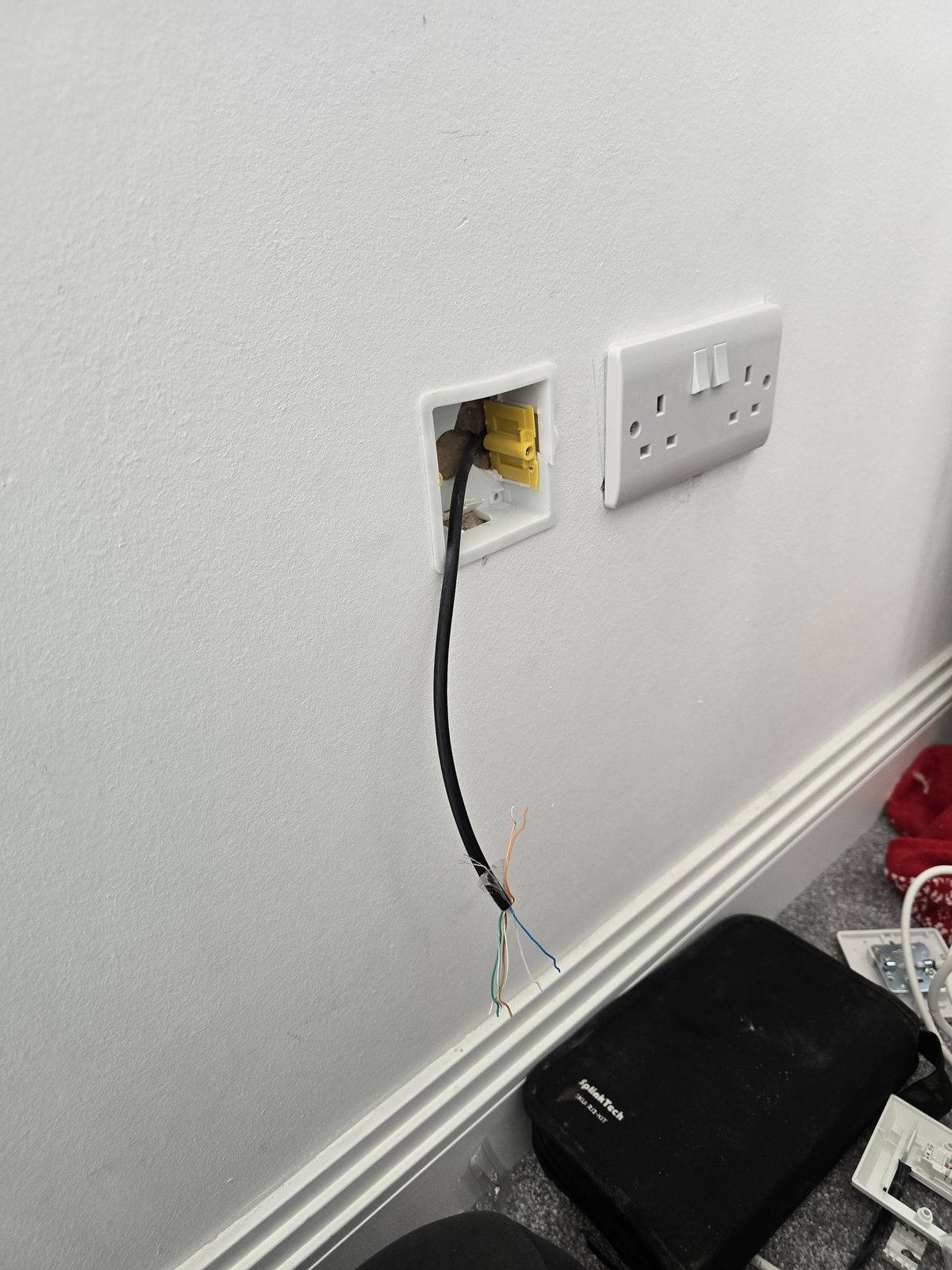
Cable installation quality still matters
A good drawing still needs careful work on site. Routes and containment should protect the cable from damage; pulling and bending should follow the selected manufacturer's requirements. Terminations need compatible components and careful handling of the pairs. Label both ends so each connection can be identified later.
Coordinate separation from electrical services, shared routes and crossings with the electrical contractor and responsible designer. There is no single spacing measurement suitable for every combination of cable, service and containment. Electrical work and any specialist building or fire-stopping requirements remain with the appropriately qualified trade or designer.
Agree what “tested” means. A basic wire-map check can identify connection faults; it does not certify the installed link's performance to a cabling standard. Application checks and formal certification answer different questions, as Fluke Networks' explanation of testing levels sets out. The test method and records should match the project, followed by checks of the finished network where commissioning is included.
The flip side: plenty of electricians are excellent at data cabling
Some electricians are highly experienced with structured cabling and network infrastructure. Some provide the design, installation and commissioning together. If your contractor can explain the proposed layout, equipment requirements and test approach, their trade title is not a reason to exclude them.
The same scrutiny applies to someone called a network engineer. Ask for a clear scope and relevant experience. The useful question is: who is designing, specifying, testing and taking responsibility for the finished network?
When an electrician and network engineer should work together
Collaboration works best before first fix. One plan should show the cable origins and destinations, equipment positions, responsibilities and the points at which work is checked. Changes on site need to reach whoever owns the design before a planned outlet moves or a different cable is substituted.
EDD does not need to physically pull every cable for this to work. What matters is that the installation follows the agreed design and responsibilities are clear. Our pre-plaster wiring guide covers the wider room-by-room planning questions; smart-home design brings the network and connected systems together where that is the project's purpose.
Who should you use for your project?
Before accepting a scope, ask where the cables return, how Wi-Fi positions were chosen, what equipment is included, what will be tested and who handles a connection that does not work at handover. Our Wi-Fi and home network service covers the wireless and active network design alongside the cabling.
Frequently asked questions
Can an electrician install Ethernet cabling?
Yes, where they are competent in the data-cabling work involved. Many electricians do this well. Confirm whether their scope also includes network design, termination, testing and any equipment configuration you need.
Do I need a network engineer for one Ethernet socket?
Not necessarily. A competent data-cabling installer may be enough for a straightforward extra point. More involved Wi-Fi, switching, PoE or building links make coordinated network design increasingly useful.
Can my electrician pull cables to a network engineer's design?
Yes, where both parties agree the specification, routes, positions, handling requirements and responsibilities. Decide who checks first fix and who terminates, tests and commissions the finished system.
Should the home network be designed before plastering?
For a renovation or new build, it is sensible to agree the topology, equipment positions and cable routes before walls close. The detailed specification should follow how the property and its connected systems will be used.
Clear written quotation before any chargeable work. Short-notice appointments may be available across Stockport, Greater Manchester and Cheshire.