The problem: a wall-mounted TV without the hanging cables
Mounting the television itself was only part of this WA3 job. The customer wanted the screen to sit neatly on the wall without the usual power and connection cables dropping down beneath it. That meant the mounting position, bracket, power point, cable route and final wall finish needed to be planned together rather than treated as separate jobs.
This is the difference between simply fixing a television to the wall and planning the whole finished result. The aim was a clean installation that looked intentional once the room was decorated again.
A slim flat-to-wall installation
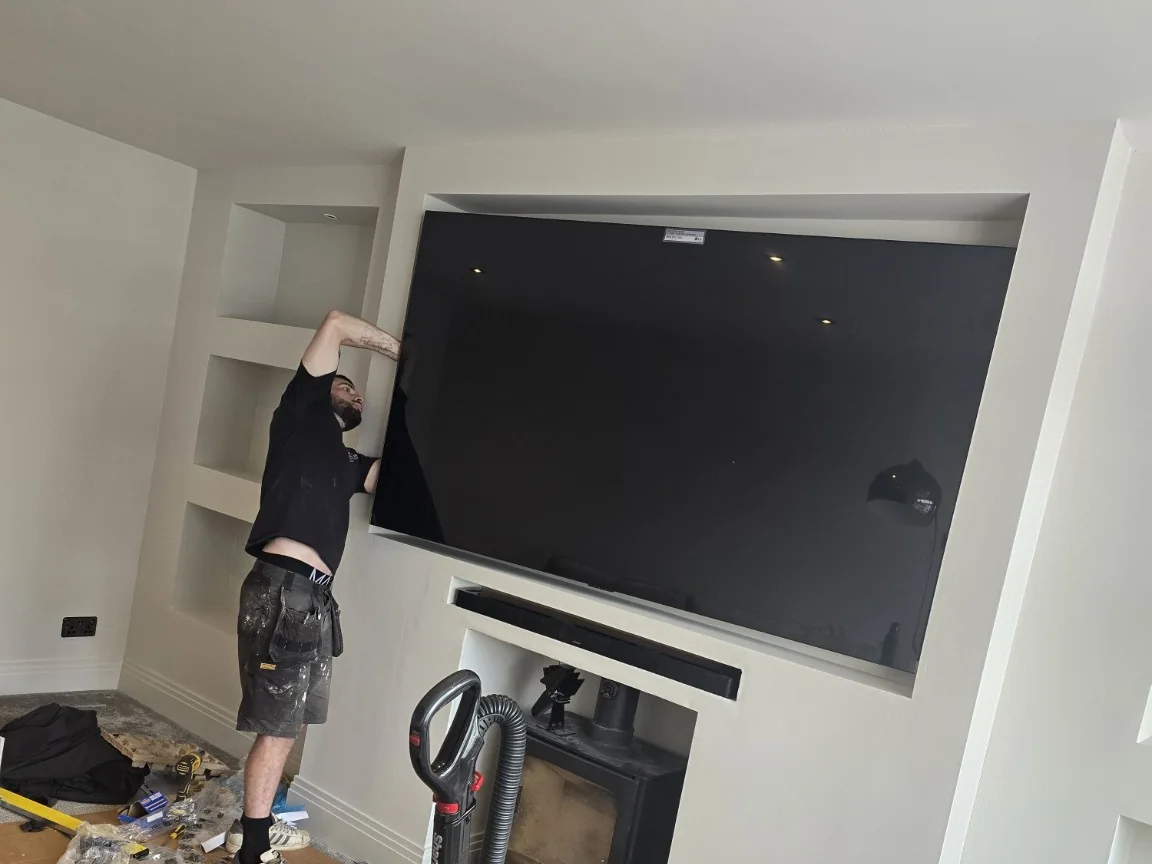
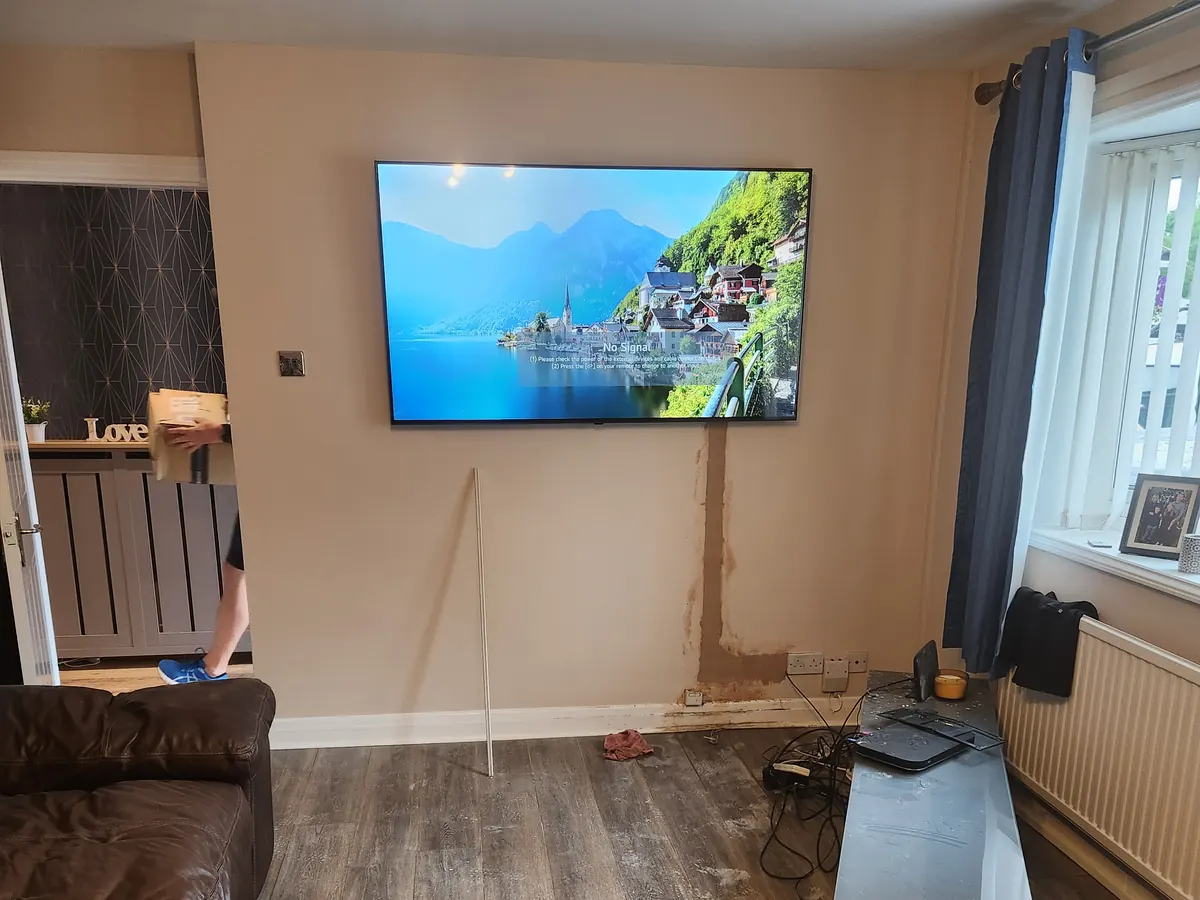
A suitable flat-to-wall bracket was supplied and fitted for the 65-inch television. The TV was positioned and mounted as part of the same scope as the concealed cabling and power work, so the points behind the screen could be planned around the final bracket position rather than added afterwards.
- 65-inch TV mounted on a supplied flat-to-wall bracket
- Bracket, power position and cable route planned as one job
- No visible cable drop required beneath the screen
- Final wall left ready for customer painting
Moving the power behind the television
Leaving the power connection at floor level would still have meant a visible lead beneath the TV. A new double socket was therefore installed behind the screen so the power connection sat where the equipment actually needed it and remained hidden once the television was in place.
That approach is one reason it is useful to plan the whole installation before the bracket goes on the wall. The position of the socket has to work with the screen, bracket and available wall space rather than simply being placed somewhere behind the TV.
Concealing the TV cables inside the wall
The remaining cables were routed inside the wall rather than being left visible or covered with surface trunking. Access was created only where needed so the cable route could run between the TV position and the lower connection area.
Concealed routing is not the right answer for every wall. The construction, available route and amount of making good all matter. On this project, an in-wall route gave the customer the clean appearance they wanted and was worth incorporating into the wider installation.
Mounting the TV was not where the job finished
Creating a concealed route inevitably disturbs the wall where access is required. Rather than leaving the customer with an open chase and another trade to organise, Evolution replastered and made good the affected section as part of the job.
The wall was left ready for the customer's final painting and decorating. The technical work, cable concealment and making good were therefore handled as one coordinated scope instead of becoming a chain of separate appointments.
The result: one finished installation rather than several separate jobs
The completed scope combined the 65-inch TV mount, supplied flat bracket, hidden cabling, a new double socket behind the screen and replastering of the cable route. Once the wall was painted, there would be no need for a visible cable channel beneath the television.
It is a simple project, but it demonstrates the way we prefer to work: understand the finished result first, then take ownership of the practical pieces required to get there.
Planning a similar TV installation in Warrington?
Every property is different. Some walls allow cables to use an existing cavity; others need carefully planned access or a chased route that is made good afterwards. If you are considering a wall-mounted TV, send us a photo of the wall, the TV size or model and an idea of where the connected equipment will sit.
You can read more about our TV wall mounting and hidden-cable installations, see our wider technology services around Warrington, or read our guide to hiding cables for a wall-mounted TV.