
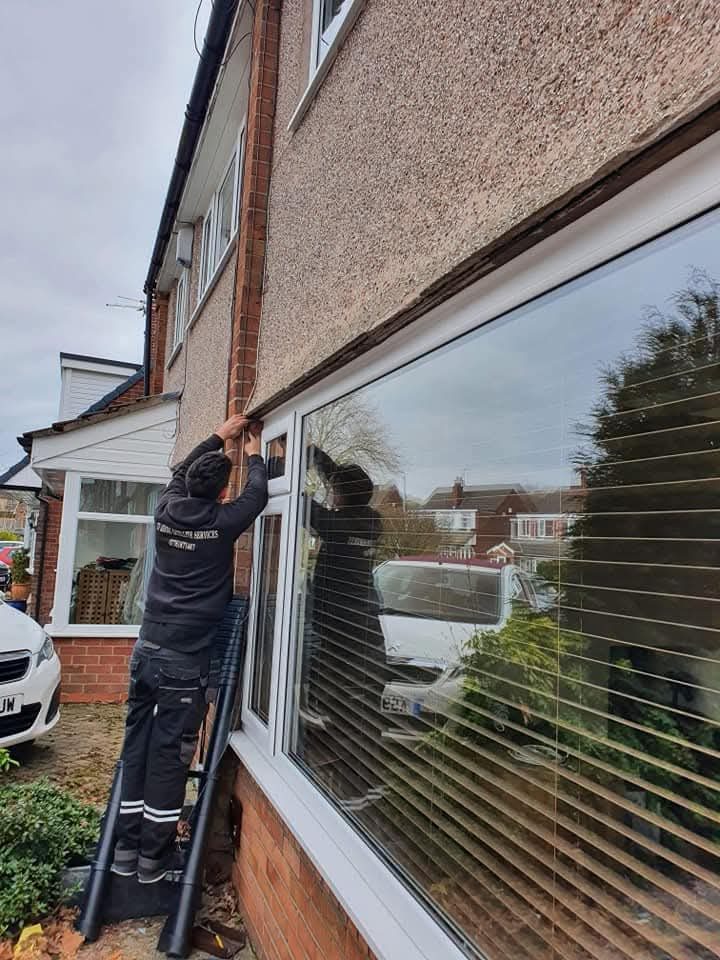
TV aerial fault finding — signal meter first, guesswork never
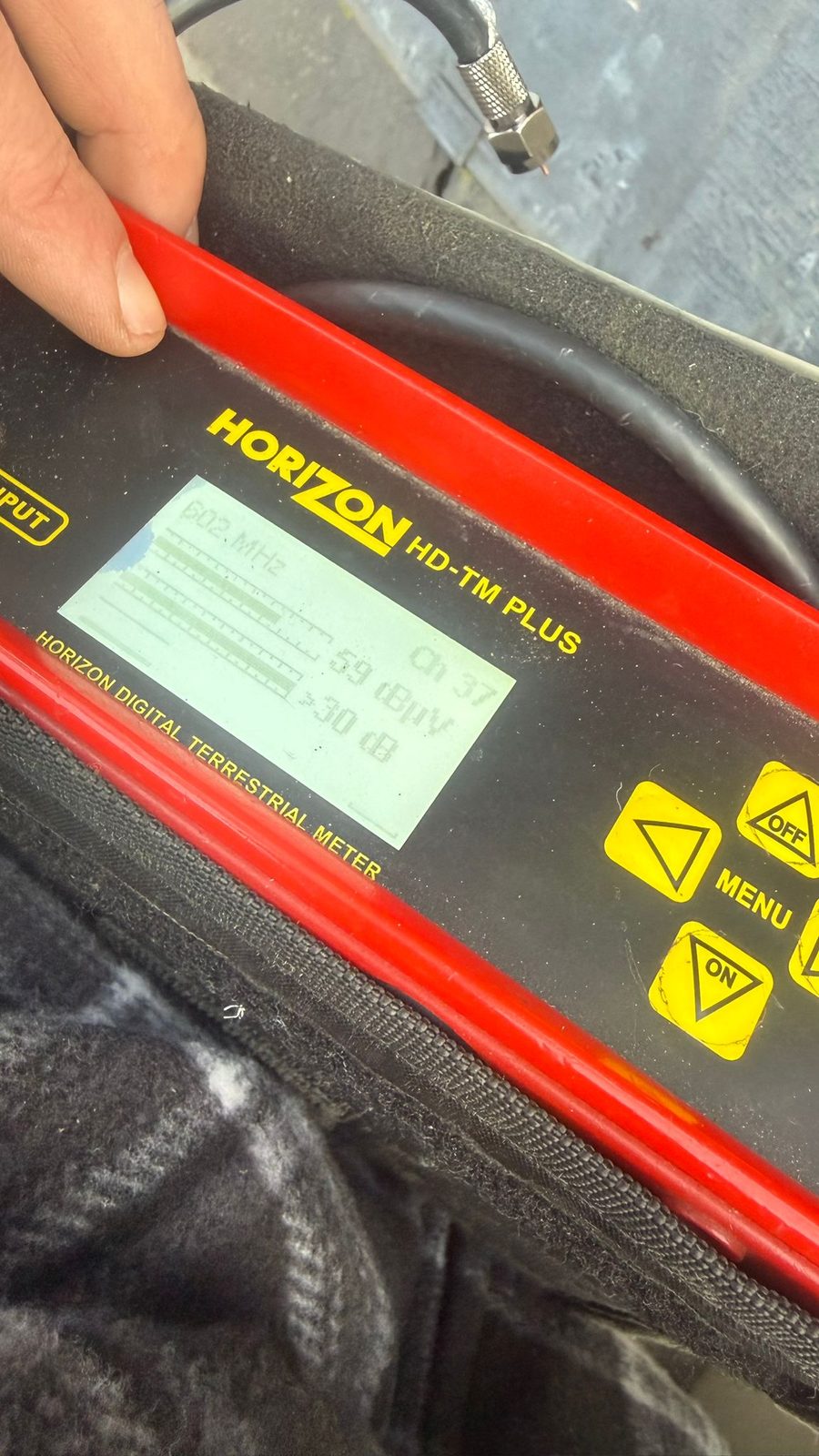
Aerial fault finding starts by measuring the affected outlet and then working through the signal path as needed. Signal level, quality measurements such as MER and error readings help show whether the problem is likely to be upstream at the aerial, in the down-lead or connections, within an amplifier or splitter, at the wall plate, or at the receiving equipment. The point is to isolate the fault before recommending parts rather than swapping components until the picture returns.
- Appropriate TV signal meter used for diagnosis
- Before-and-after readings taken where useful to the repair
- Fault narrowed down before replacement parts are recommended
- Fixed price agreed before repair work starts
No signal on your TV — the real causes we find
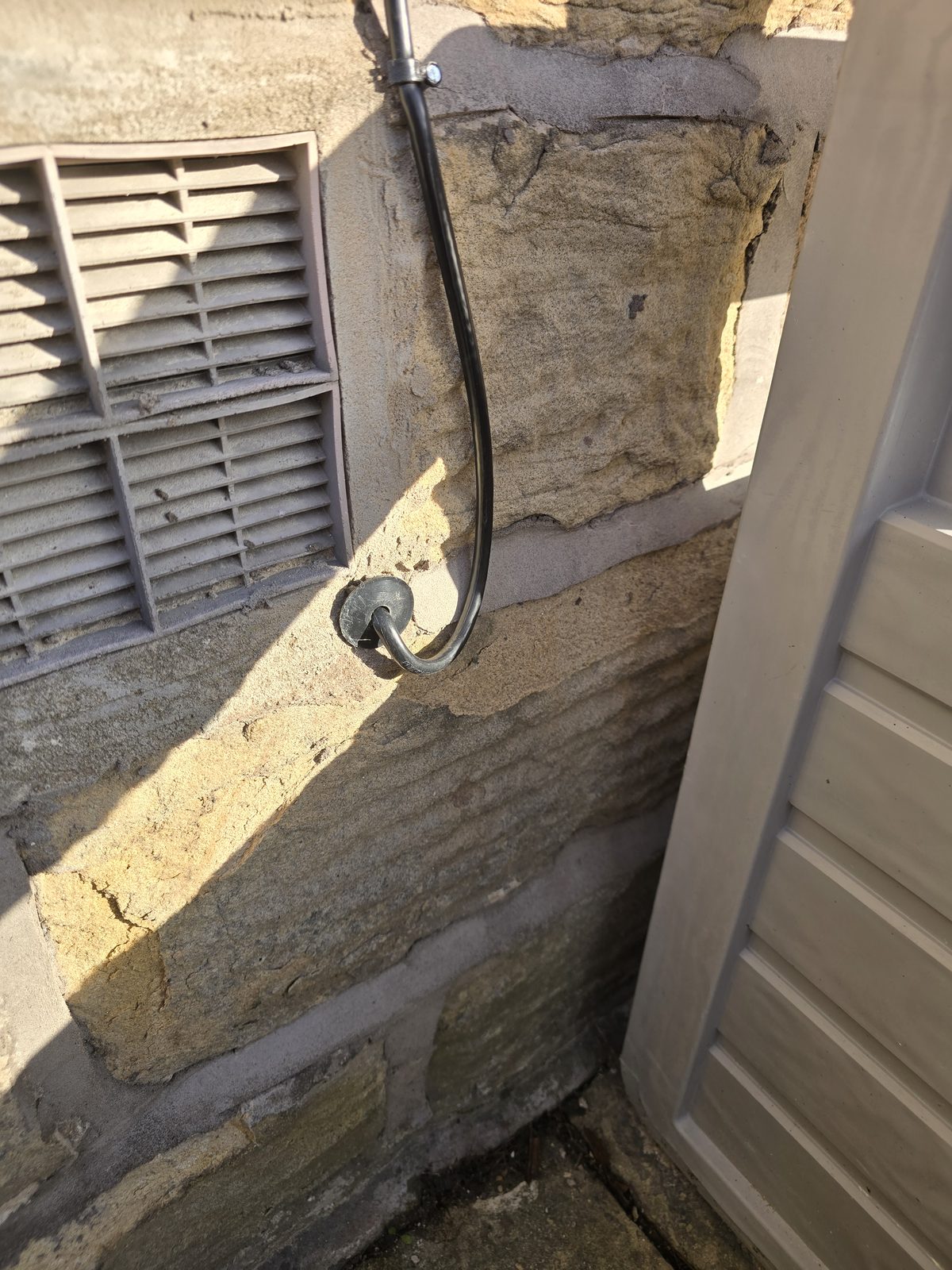
"No signal" can come from several places: a corroded or waterlogged connector, a loose or damaged cable, a failed masthead or distribution amplifier, an aerial that has moved, a faulty wall plate, or the TV/receiver itself. We start at the affected point and work backwards through the system so a working component is not replaced just because it is easy to reach.
Pixelation, freezing and breaking-up pictures
Pixelation is what a digital signal looks like when the receiver is struggling to decode it reliably. Causes can include weak or intermittent reception, damaged or loose connections, water ingress, an amplifier fault, excessive signal level, transmitter or atmospheric conditions, and interference from nearby sources. Those causes can look similar on the screen, which is why we check the signal path and measurements rather than fitting a booster by default.
- Weak or intermittent reception — investigate alignment, aerial, cable path and transmitter choice
- Water in a connector or down-lead — reterminate or replace the affected section
- Amplifier fault or unnecessary amplification — repair, replace or remove as the measurements justify
- Interference on affected frequencies — identify the source and filter only where appropriate
- Transmitter or alignment mismatch — verify the predicted and measured reception before realigning
Poor reception on specific channels or in bad weather
If reception used to be fine and is now marginal, common installation faults include water ingress, a deteriorated cable or connector, aerial movement and an amplifier or power-supply problem. Temporary transmitter engineering, atmospheric conditions or interference can also affect reception, so a bad-weather symptom does not automatically mean the aerial needs replacing. An older aerial can still be perfectly serviceable if it is in good condition, correctly aligned and suitable for the frequencies being received.
Loft aerial repairs
A loft aerial keeps the hardware out of the weather, but reception through a roof is property-specific. Slate, tiles, foil-backed insulation, solar equipment and other materials or changes in the loft can reduce or disturb the signal. Common faults include a failed amplifier or power supply, disturbed cabling, movement of the aerial or a position that simply does not leave enough reception margin. We measure the available signal before deciding whether an in-loft repair is sensible or whether an external mounting position would be more reliable.
Masthead amplifier and booster faults
TV signal boosters and masthead amplifiers can fail, lose power or become unnecessary after other parts of a system change. We check the power supply, input and output signal and whether the amplifier is helping the distribution or simply adding level to noise and unwanted signals. Sometimes the right repair is a replacement amplifier; sometimes a passive arrangement is the better answer. Our full write-up on whether boosters actually work goes into the detail.
Multi-room and distribution system faults
If one TV works and another shows "no signal", the branch feeding the problem set is an obvious place to investigate: its cable, wall plate, splitter, amplifier output or connector. Passive splitters introduce insertion loss, but that is not automatically a fault — with enough incoming signal margin they can be the simplest correct design. Where the measured levels do not support passive splitting, a suitable distribution amplifier or a different cable layout may be appropriate. Our guide on why one TV has no signal but another works walks through the checks in order.
Storm damage and aerial repair after bad weather
Bad weather can expose or create physical faults such as a rotated aerial, damaged mast or bracket, loose cabling and water ingress. It can also coincide with temporary reception conditions that do not require roof work. If reception changed around a storm, we inspect the physical system and check the signal rather than assuming the weather proves one particular fault. Give the office a ring on 0161 399 1757 and we'll tell you the earliest practical visit we can offer. Photos and a written report can be provided where agreed for an insurance claim.
What we won't do
Getting an idea of cost before we visit
Every repair is a fixed price agreed with you before any work starts. For straightforward symptoms we can often give you initial guidance over the phone, or from a clear photo of the aerial and the wall plate sent on WhatsApp. More involved repairs — anything that depends on what a signal meter finds on the roof or what condition the cabling is genuinely in — need a proper on-site look before we can put an accurate figure on the work. Either way you'll have a fixed quotation before we start, with no obligation to go ahead. Give the office a call on 0161 399 1757.
Common TV signal problems we help with
If you'd like to narrow down what's wrong before you call, these plain-English guides cover the faults we see most often across Stockport: why some Freeview channels work but others don't, one TV says no signal but another works, do aerial boosters actually work, why signal gets worse in rain and wind, loft aerial problems, what causes pixelating pictures, and whether it's better to repair or replace the aerial.
Areas we repair TV aerials in
We repair TV aerials across Stockport, South Manchester, Tameside and East Cheshire — including Cheadle and Gatley, Hazel Grove and Bramhall, Marple, Romiley and Compstall, Offerton and Edgeley, Heaton Chapel, Heaton Moor and Heaton Mersey, plus Poynton, Woodford, Adlington, High Lane and the surrounding villages.
Symptoms we're called out for every week
If you recognise any of the below, meter testing at the affected outlet and through the signal path is usually the fastest way to narrow down the fault. We'll agree a fixed price with you before any chargeable repair work starts.
No signal on every channel
Common causes include a broken or corroded connection, a failed amplifier or power supply, damaged cabling, or an aerial that has moved — but the TV or receiver is checked too rather than ruled out by assumption.
Pixelation or picture breaking up
A weak or intermittent signal, water tracking into a cable, an amplifier adding noise, transmitter conditions or interference from a nearby source can all produce similar symptoms. Measurements help separate them.
Some channels missing
Freeview services are carried in multiplexes. If one multiplex is affected, a group of channels can disappear while others keep working — a useful clue when tracing the fault.
Reception worse in rain or wind
Water ingress, loose or damaged cabling and an already-marginal installation are common possibilities, but temporary transmitter or atmospheric conditions can also affect reception.
One TV works, another says no signal
That often points to the branch feeding the problem TV — a wall socket, cable, splitter or distribution amplifier — although the working TV does not by itself prove the rest of the aerial system is perfect.
Loft aerial has gone off
Loft reception can be affected by roof materials, foil-backed insulation, solar equipment, cable disturbance and changes around the aerial. We test the proposed position before deciding whether repair or an external move is the better answer.
TV Aerial Repair near me — Stockport & Greater Manchester
Searching for tv aerial repair near you? Our engineer is based in Stockport (SK6) and covers the whole borough plus surrounding Greater Manchester, north-Cheshire and High Peak areas. Short-notice appointments may be available depending on location, workload and the work required.
- Stockport
- Cheadle
- Heaton Chapel
- Offerton
- Edgeley
- Davenport
- Bramhall
- Hazel Grove
- Marple
- Romiley
- Woodley
- Bredbury
- Compstall
- Poynton
- Hyde
- Gee Cross
- Oldham
- Rochdale
- Macclesfield
- Buxton